Inclusive Psychology - Additional Content
Image supplied by
FreeFoto.com Used with permission
Some Early Presentations of
Transpersonal Perspectives
The following is a listing of quotations, from quite divergent early sources, that are indicative of various aspects of transpersonal stances and perspectives. The quotations are presented in chronological order (of original publication), and a reference is provided following each quotation.
~~~~~~~~~~~~~~~~~~~~~~~~~~
I've heard it said there's a window that opens
from one mind to another,
but if there's no wall, there's no need
for fitting the window, or the latch. (p. 10)
Rumi, Jelaluddin. (1984). Open secret (J. Moyne & C. Barks, Trans.). Putney, VT: Threshold.
The following is a listing of quotations, from quite divergent early sources, that are indicative of various aspects of transpersonal stances and perspectives. The quotations are presented in chronological order (of original publication), and a reference is provided following each quotation.
~~~~~~~~~~~~~~~~~~~~~~~~~~
I've heard it said there's a window that opens
from one mind to another,
but if there's no wall, there's no need
for fitting the window, or the latch. (p. 10)
Rumi, Jelaluddin. (1984). Open secret (J. Moyne & C. Barks, Trans.). Putney, VT: Threshold.
(Original works are from the 13th Century)
The
One remains, the many change and pass;
Heaven's light forever shines, Earth's shadows fly;
Life, like a dome of many-coloured glass,
Stains the white radiance of Eternity,
Until Death tramples it to fragments.—Die,
If though wouldst be with that which thou dost seek!
Follow where all is fled!—Rome's azure sky,
Flowers, ruins, statues, music, words are weak
The glory they transfuse with fitting truth to speak.
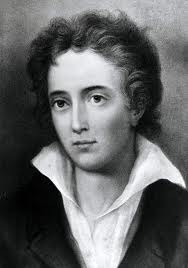
~Percy Bysshe Shelley (from "Adonais", Stanza 52, pp. 414-415)
Shelley, P. B. (1944). Shelley: Selected poems, essays, and letters (selected and edited by E.
Heaven's light forever shines, Earth's shadows fly;
Life, like a dome of many-coloured glass,
Stains the white radiance of Eternity,
Until Death tramples it to fragments.—Die,
If though wouldst be with that which thou dost seek!
Follow where all is fled!—Rome's azure sky,
Flowers, ruins, statues, music, words are weak
The glory they transfuse with fitting truth to speak.
~Percy Bysshe Shelley (from "Adonais", Stanza 52, pp. 414-415)
Shelley, P. B. (1944). Shelley: Selected poems, essays, and letters (selected and edited by E.
Barnard). New York: The
Odyssey Press. (Original work written 1821)
Myers, F. W. H. (1892). The subliminal consciousness: Chapter 1: General characteristics and
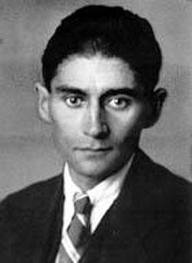
The indestructible is one: it is each individual human being and, at the same time, it is common to all, hence the incomparably indivisible union that exists between human beings. (p. 70)
Kafka, Franz. (2006). The Zürau Aphorisms of Franz Kafka. New York: Random House.
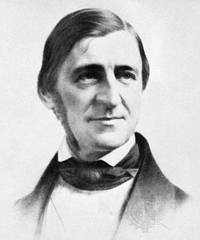
The heart in thee is the heart of all; not a valve, not a wall, not an intersection is there anywhere in nature, but one blood rolls uninterruptedly an endless circulation through all men, as the water of the globe is all one sea, and, truly seen, its tide is one. (pp. 208-209)
Emerson, Ralph Waldo. (1961). The over-soul. In Emerson's essays (pp. 188-211).
Schrödinger, Erwin. (2004). What is life? In What is life? with mind and matter and
Salinger, J. D. (1971). Teddy. In Nine stories (pp. 166-198). New York:
There lay the Overmind, whatever it might be, bearing the same relation to man as man bore to the amoeba. Potentially infinite, beyond mortality, how long had it been absorbing race after race as it spread across the stars? Did it too have desires, did it have goals it sensed dimly yet might never attain? Now it had drawn into its being all that the human race had ever achieved. This was not tragedy, but fulfillment. The billions of transient sparks of consciousness that had made up humanity would flicker no more like fireflies against the night. But they had not lived utterly in vain. (pp. 205-206)
Clarke, Arthur C. (1953). Childhood's end. New York: Ballantine Books.
" . . . the eternal Self needs the limited ego in order to experience itself in outer reality. It can thus, in earthly form, 'pass through the experiences of the three-dimensional world, and by greater awareness take a further step toward realization'. . . ." (p. 171)
"Of course those animals have existed there on the plains for untold ages, but it suddenly dawned on Jung that this was only potential existence until someone gave them 'objective existence' by creatively knowing they were there. This, he wrote, is what the alchemists meant when they said 'What nature leaves imperfect, the [alchemistic] art perfects.' Thus 'the cosmic meaning of consciousness became overwhelmingly clear' to him, and he knew that man could continue creation, in fact he was even 'indispensable for the completion of creation.' If man does not accept this task, the world is bound to go on 'in the profoundest night of non-being down to its unknown end.' But if people can only realize this vital myth of man, that he is 'indispensible for the completion of creation,' then our troubled age may yet rediscover as much, or even more, meaning in life than it has lost." (p. 172)
"But we can also see here just how important the ego is to the Self, for it was the former that became conscious of the impression, that gave it three-dimensional existence, definite existence, whereas five thousand years are as yesterday to the Self, whose knowledge may indeed even be absolute, without ever registering in the here and now, in this moment, and thus giving it definite or objective existence." (p. 173)
Hannah, Barbara (1991). Jung—his life and work: A biographical memoir. Boston: Shambhala.
Each of us is in reality an abiding psychical entity far
more extensive than he knows--an individuality which can never express itself completely
through any corporeal manifestation. The Self manifests through the organism;
but there is always some part of the Self unmanifested; and always, as it
seems, some power of organic expression in abeyance or reserve. (p. 305)
Myers, F. W. H. (1892). The subliminal consciousness: Chapter 1: General characteristics and
subliminal messages. Proceedings of
the Society for Psychical Research, 7, 298-327.
He saw and knew that the Cosmos
is not dead matter but a living Presence, that the soul of man is immortal,
that the universe is so built and ordered that without any peradventure all
things work together for the good of each and all, that the foundation
principle of the world is what we call love and that the happiness of
every one is in the long run absolutely certain. He claims that he
learned more within the few seconds during which the illumination lasted than
in previous months or even years of study, and that he learned much that no
study could ever have taught. (p. 8)
Bucke, Richard Maurice. (1901). Cosmic consciousness: A study in the evolution of the human
mind. Philadelphia, PA: Innes & Sons. [Bucke is describing his own cosmic consciousness
experience, which had occurred in 1872.]
The individual . . . is . . . in at least possible touch
with something higher . . . a better part of him, even though it may be but a
most helpless germ. . . . He becomes conscious that this higher part is
conterminous and continuous with a More
of the same quality, which is operative in the universe outside of him, and
which he can keep in working touch with. (p. 508)
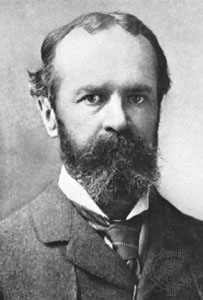
James, William. (1985). The varieties of religious experience. New York: Penguin Classics. (Original work published 1902)
Disregarding the over-beliefs, and confining ourselves to what is common and generic, we have in the fact that the conscious person is continuous with a wider self through which saving experiences come, a positive content of religious experience which, it seems to me, is literally and objectively true as far as it goes. (p. 515)
James, William. (1985). The varieties of religious experience. New York: Penguin. (Original work published 1902)
We with our lives are like islands in the sea, or like trees in the forest. The maple and the pine may whisper to each other with their leaves, and Conanicut and Newport hear each other's foghorns. But the trees also commingle their roots in the darkness underground, and the islands also hang together through the ocean's bottom. Just so there is a continuum of cosmic consciousness, against which our individuality builds but accidental fences, and into which our several minds plunge as into a mother-sea or reservoir. Our "normal" consciousness is circumscribed for adaptation to our external earthly environment, but the fence is weak in spots, and fitful influences from beyond leak in, showing the otherwise unverifiable common connection. (pp. 798-799)
James, William. (1977). Final impressions of a psychical researcher. In J. McDermott (Ed.),
James, William. (1985). The varieties of religious experience. New York: Penguin Classics. (Original work published 1902)
Disregarding the over-beliefs, and confining ourselves to what is common and generic, we have in the fact that the conscious person is continuous with a wider self through which saving experiences come, a positive content of religious experience which, it seems to me, is literally and objectively true as far as it goes. (p. 515)
James, William. (1985). The varieties of religious experience. New York: Penguin. (Original work published 1902)
We with our lives are like islands in the sea, or like trees in the forest. The maple and the pine may whisper to each other with their leaves, and Conanicut and Newport hear each other's foghorns. But the trees also commingle their roots in the darkness underground, and the islands also hang together through the ocean's bottom. Just so there is a continuum of cosmic consciousness, against which our individuality builds but accidental fences, and into which our several minds plunge as into a mother-sea or reservoir. Our "normal" consciousness is circumscribed for adaptation to our external earthly environment, but the fence is weak in spots, and fitful influences from beyond leak in, showing the otherwise unverifiable common connection. (pp. 798-799)
James, William. (1977). Final impressions of a psychical researcher. In J. McDermott (Ed.),
The writings of William James: A
comprehensive edition (pp. 787-799). Chicago: University
of Chicago Press.
(Original work published in 1909)
For a total gnostic or divine
living would include not only the individual life of the being but the life of
others made one with the individual in a common uniting consciousness. Such a
life must have for its main constituting power a spontaneous and innate, not a
constructed, unity and harmony; this can only come by a greater identity of
being and consciousness between individual and individual unified in their
spiritual substance, feeling themselves to be self and self of one
self-existence, acting in a greater unitarian force
of knowledge, a greater power of the being. There must be an inner and direct
mutual knowledge based upon a consciousness of oneness and identity, a
consciousness of each other's being, thought, feeling, inner and outer
movements, a conscious communication of mind with mind, of heart with heart, a
conscious impact of life upon life, a conscious interchange of forces of being
with forces of being; in any absence or deficiency of these powers and their
intimate light there could not be a real or complete unity or a real and
complete natural fitting of each individual's being, thought, feeling, inner
and outer movements with those of the individuals around him. A growing basis
and structure of conscious unanimism, we might say,
would be the character of this more evolved life. (p. 1079)
Sri Aurobindo. (2000). The life divine. Twin Lakes, WI: Lotus Press. (Original work published
Sri Aurobindo. (2000). The life divine. Twin Lakes, WI: Lotus Press. (Original work published
1914-1919)
Theoretically
there is a perfect possibility of happiness: believing in the indestructible
element in oneself and not striving towards it. (p. 69)
The indestructible is one: it is each individual human being and, at the same time, it is common to all, hence the incomparably indivisible union that exists between human beings. (p. 70)
Kafka, Franz. (2006). The Zürau Aphorisms of Franz Kafka. New York: Random House.
(Original work published 1924) Also available, in German, as Aphorisms 69 and 70-71 at
The Supreme Critic on the errors of the past and the
present, and the only prophet of that which must be, is that great nature in
which we rest as the earth lies in the soft arms of the atmosphere; that Unity,
that Over-soul, within which every man's particular being is contained and made
one with all other; that common heart . . . . We live in succession, in
division, in parts, in particles. Meantime within man is the soul of the whole;
the wise silence; the universal beauty, to which every part and particle is
equally related, the eternal ONE. And this deep power in which we exist and
whose beatitude is all accessible to us, is not only self-sufficing and perfect
in every hour, but the act of seeing and the thing seen, the seer and the spectacle,
the subject and the object, are one. We see the world piece by piece, as the
sun, the moon, the animal, the tree; but the whole, of which these are shining
parts, is the soul. (pp. 189-190)
The heart in thee is the heart of all; not a valve, not a wall, not an intersection is there anywhere in nature, but one blood rolls uninterruptedly an endless circulation through all men, as the water of the globe is all one sea, and, truly seen, its tide is one. (pp. 208-209)
Emerson, Ralph Waldo. (1961). The over-soul. In Emerson's essays (pp. 188-211).
New York: Thomas Y. Crowell Company/Apollo Edition.
(Original work published 1926)
"I figgered about the Holy Sperit and the Jesus road. I
figgered, 'Why do we got to hang it on God or Jesus? Maybe,' I figgered, 'maybe
it's all men an' all women we love; maybe that's the Holy Sperit—the human
sperit—the whole shebang. Maybe all men got one big soul ever'body's a part
of.' Now I sat there think' it, an' all of a suddent—I knew it. I knew it so
deep down that it was true, and I still know it."(pp. 24-25)
Steinbeck, John. (1972). Grapes of wrath. New York: Bantam Pathfinder.
Steinbeck, John. (1972). Grapes of wrath. New York: Bantam Pathfinder.
(Original work published 1939)
The only possible alternative is simply to keep to the
immediate experience that consciousness is a singular of which the plural
is unknown; that there is only one thing and that what seems to be a
plurality is merely a series of different aspects of this one thing, produced
by a deception (the Indian MAYA); the same illusion is produced in a gallery of
mirrors, and in the same way Gaurisankar and Mt Everest turned out to be the
same peak seen from different valleys. (p. 89)
Schrödinger, Erwin. (2004). What is life? In What is life? with mind and matter and
autobiographical sketches (pp. 1-90).
(Original work published 1944)
I will suggest that [a] ... clue to the paranormal
lies beyond the realm of needs and barriers, indeed that it does not lie inside
of human personality at all, whether in its generic or in its individualized
aspects. I believe, on the contrary, that it is strictly interpersonal; that it
lies in the relations between persons and not in the persons as such. If it be
objected immediately that it must be personal if it is to be interpersonal,
then let me plead that there is all the difference in the world between our
stretching the conception of the personal to the breakingpoint and on the other
hand, our burning all our individualistic bridges behind us, and saying that
the world of interpersonal phenomena is a world which must be faced on its own
terms; pursued in its own right; its laws made clear and recognized to be
essentially different from those laws which apply to individuals. I would plead
for the direct empirical study of the laws of the interpersonal; the functions
of an interpersonal field. I suggest that it is not within the individual
psychic structure, but within certain specific relations between the psychic
structure of one individual and the psychic structure of another that our clue
lies; or if you like, that the phenomena are, so to speak, transpersonal, just
as they are, indeed, trans-spatial and trans-temporal. (pp. 11-12)
Murphy, Gardner. (1949). Psychical research and personality. Proceedings of the Society
Murphy, Gardner. (1949). Psychical research and personality. Proceedings of the Society
for Psychical Research, 49,
1-15.
The true value of a human being is
determined primarily by the measure and the sense in which he has attained to
liberation from the self.
Einstein, Albert. (1995). Ideas and opinions (3rd ed.). New York: Three Rivers Press. (p. 12)
Einstein, Albert. (2006). The world as I see it. Minneapolis, MN: Filiquarian Publishing, LLC. (p. 17)
Originally published in: Einstein, Albert. (1934). Mein Weltbild. Amsterdam: Querido Verlag.
A human being is a part of the whole, called by us "Universe," a part limited in time and space. He experiences himself, his thoughts and feelings as something separated from the rest, a kind of optical delusion of his consciousness. This delusion is a kind of prison for us, restricting us to our personal desires and to affection for a few persons nearest to us. Our task must be to free ourselves from this prison by widening our circle of compassion to embrace all living creatures and the whole of nature in its beauty. Nobody is able to achieve this completely, but the striving for such achievement is in itself a part of the liberation and a foundation for inner security. (p. 60)
Albert Einstein (1879-1955), in a letter dated 1950, quoted in Howard W. Eves,
Einstein, Albert. (1995). Ideas and opinions (3rd ed.). New York: Three Rivers Press. (p. 12)
Einstein, Albert. (2006). The world as I see it. Minneapolis, MN: Filiquarian Publishing, LLC. (p. 17)
Originally published in: Einstein, Albert. (1934). Mein Weltbild. Amsterdam: Querido Verlag.
A human being is a part of the whole, called by us "Universe," a part limited in time and space. He experiences himself, his thoughts and feelings as something separated from the rest, a kind of optical delusion of his consciousness. This delusion is a kind of prison for us, restricting us to our personal desires and to affection for a few persons nearest to us. Our task must be to free ourselves from this prison by widening our circle of compassion to embrace all living creatures and the whole of nature in its beauty. Nobody is able to achieve this completely, but the striving for such achievement is in itself a part of the liberation and a foundation for inner security. (p. 60)
Albert Einstein (1879-1955), in a letter dated 1950, quoted in Howard W. Eves,
Mathematical circles adieu: A fourth collection of mathematical stories and anecdotes.
Boston: Prindle,
Weberand Schmidt, 1977.
"I was six when I saw that everything was God, and my hair stood up, and all that," Teddy said. "It was on a Sunday, I remember. My sister was only a very tiny child then, and she was drinking her milk, and all of a sudden I saw that she was God and the milk was God. I mean, all she was doing was pouring God into God, if you know what I mean." (p. 189)
Salinger, J. D. (1971). Teddy. In Nine stories (pp. 166-198). New York:
Bantam. (Original work published 1953)
Imagine that every man's mind is an island, surrounded by
ocean. Each seems isolated, yet in reality all are linked by the bedrock from
which they spring. If the ocean were to vanish, that would be the end of the
islands. They would all be part of one continent, but their individuality would
have gone. (p. 176)
There lay the Overmind, whatever it might be, bearing the same relation to man as man bore to the amoeba. Potentially infinite, beyond mortality, how long had it been absorbing race after race as it spread across the stars? Did it too have desires, did it have goals it sensed dimly yet might never attain? Now it had drawn into its being all that the human race had ever achieved. This was not tragedy, but fulfillment. The billions of transient sparks of consciousness that had made up humanity would flicker no more like fireflies against the night. But they had not lived utterly in vain. (pp. 205-206)
Clarke, Arthur C. (1953). Childhood's end. New York: Ballantine Books.
Please excuse all the
"man" and "he" terms that Barbara Hannah uses in the
following quotation. The words within single quotes are Jung's; the rest are
Barbara Hannah's.
" . . . the eternal Self needs the limited ego in order to experience itself in outer reality. It can thus, in earthly form, 'pass through the experiences of the three-dimensional world, and by greater awareness take a further step toward realization'. . . ." (p. 171)
"Of course those animals have existed there on the plains for untold ages, but it suddenly dawned on Jung that this was only potential existence until someone gave them 'objective existence' by creatively knowing they were there. This, he wrote, is what the alchemists meant when they said 'What nature leaves imperfect, the [alchemistic] art perfects.' Thus 'the cosmic meaning of consciousness became overwhelmingly clear' to him, and he knew that man could continue creation, in fact he was even 'indispensable for the completion of creation.' If man does not accept this task, the world is bound to go on 'in the profoundest night of non-being down to its unknown end.' But if people can only realize this vital myth of man, that he is 'indispensible for the completion of creation,' then our troubled age may yet rediscover as much, or even more, meaning in life than it has lost." (p. 172)
"But we can also see here just how important the ego is to the Self, for it was the former that became conscious of the impression, that gave it three-dimensional existence, definite existence, whereas five thousand years are as yesterday to the Self, whose knowledge may indeed even be absolute, without ever registering in the here and now, in this moment, and thus giving it definite or objective existence." (p. 173)
Hannah, Barbara (1991). Jung—his life and work: A biographical memoir. Boston: Shambhala.
This page contains additional materials relevant to topics mentioned on the Home page of this website.
This new psychology looks
to me very much like children learning some summary and not very adequate
alphabet . . . and imagining that their first book of obscure beginnings
. . . is the very heart of the real knowledge. They look from down up and explain the higher lights by the lower obscurities; but the foundation of these things is above and not below . . . The superconscient, not the subconscient, is the true foundation of things. The significance of the lotus is not to be found by analysing the secrets of the mud from which it grows here; its secret is to be found in the heavenly archetype of the lotus that blooms for ever in the Light above. . . .you must know the whole before you can know the part and the highest before you can truly understand the lowest. That is the promise of the greater psychology awaiting its hour . . . .
~ Sri Aurobindo
. . . is the very heart of the real knowledge. They look from down up and explain the higher lights by the lower obscurities; but the foundation of these things is above and not below . . . The superconscient, not the subconscient, is the true foundation of things. The significance of the lotus is not to be found by analysing the secrets of the mud from which it grows here; its secret is to be found in the heavenly archetype of the lotus that blooms for ever in the Light above. . . .you must know the whole before you can know the part and the highest before you can truly understand the lowest. That is the promise of the greater psychology awaiting its hour . . . .
~ Sri Aurobindo



with consciousness research
pioneer Dr. William Braud.
Click here to access a transcript of this interview.
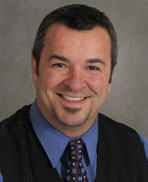
Nick Kardaras
William Braud
Excerpts from various poems
of Emily Dickinson:
Exultation is the going
Of an inland soul to sea,
Past the houses — past the headlands
Into deep Eternity
'Tis little I
could care for Pearls
Who own the ample sea
You'll know it as you know 'tis Noon
By Glory
As you do the sun
By Glory
Explore thyself Therein thyself shall find
The "Undiscovered Continent" No Settler had the Mind
The Brain is wider than the sky
For put them side by side
The once the other will contain
With ease – and You – beside
Much Madness is divinest Sense
To a discerning Eye
Much Sense -- the starkest Madness
Let not Revelation
By theses be detained
Exultation is the going
Of an inland soul to sea,
Past the houses — past the headlands
Into deep Eternity
'Tis little I
could care for Pearls
Who own the ample sea
You'll know it as you know 'tis Noon
By Glory
As you do the sun
By Glory
Explore thyself Therein thyself shall find
The "Undiscovered Continent" No Settler had the Mind
The Brain is wider than the sky
For put them side by side
The once the other will contain
With ease – and You – beside
Much Madness is divinest Sense
To a discerning Eye
Much Sense -- the starkest Madness
Let not Revelation
By theses be detained

Emily Dickinson (1830-1886)
Dickinson, Emily. (1960). The complete poems of Emily Dickinson (T. H.
Johnson, Ed.). Boston: Little, Brown, & Company. (Poems originally composed
before 1886)
Approach the Immaterial in an immaterial way.
~ St. Nilus (Evagrius)
William's Favorites
I have prepared a five-page document that includes short lists of some of (to quote from a popular song) "my favorite things." More accurately, these are "things" (cities, settings, music, art, writings) that, over the years, have been especially important, meaningful, or useful to me—for a variety of reasons. List entries are in alphabetical order, with the exception of Favorite Writings, which are in the order (very rough) in which I read or reread them. If you wish to see this document, click here. The document is large (because of the images it contains), so it probably will take a while to download. Even after the document has downloaded, it may take a bit longer to download the photos into the document, so be patient. Thank you.

True mysticism
is to discover the extraordinary in the ordinary.
~ Olivier Clément
The true knowledge and the true vision of what we seek consists precisely in this—in not seeing: for what we seek transcends all knowledge, and is everywhere cut off from us by the darkness of incomprehensibility.
~ St. Gregory of Nyssa
The mind is a metaphor for experience.
~ Eugene Taylor
Here the ways of men part: If you wish to strive for peace of soul and pleasure, then believe; if you wish to be a devotee of truth, then inquire.
~ Friedrich Nietzsche
~ Olivier Clément
The true knowledge and the true vision of what we seek consists precisely in this—in not seeing: for what we seek transcends all knowledge, and is everywhere cut off from us by the darkness of incomprehensibility.
~ St. Gregory of Nyssa
The mind is a metaphor for experience.
~ Eugene Taylor
Here the ways of men part: If you wish to strive for peace of soul and pleasure, then believe; if you wish to be a devotee of truth, then inquire.
~ Friedrich Nietzsche
Double click here to edit this text.

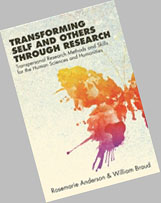
I am presenting, below, several listings of suggested research projects. These can involve a variety of forms of disciplined inquiry—not only empirical studies but also conceptual and theoretical studies, reviews and integrations of existing literature, and other forms of scholarly treatment. In some cases, I provide details and explanations. In other cases, I simply have listed some topics, the nature of which I would hope to be self-evident.
Ways of Extending and Expanding the Nature and Practice of Research
1. Studies could be conducted on the relative efficacy of various ways of doing research. A given topic could be investigated using a set of different research approaches or methods, and the relative accuracy and satisfactory nature of the findings could be assessed by researchers, participants, and various "audiences."
2. One could conduct a study that includes direct empirical comparisons
of more analytical (e.g., identifying and sorting "meaning units") versus more
intuitive ways of treating qualitative data.
3. I have wondered whether the findings of certain qualitative
studies—e.g., obtained phenomenological "structures" and the depictions and
portraits of heuristic research—truly match the specific qualities of the
experiences being studied, as opposed to being so general that these results
might match a great variety of experiences other than the "targeted"
experience. A well-designed mixed methods study involving multiple experience
sets and multiple results sets, and appropriate "blinded" judging conditions,
could explore the specificity and accuracy of qualitative findings. If findings
of qualitative studies simply are accepted and not questioned, one will never
know whether the Emperor is or is not wearing clothes.
4. How might various psychospiritual principles and practices (e.g.,
practices involved in the eight limbs of the Patanjali Yoga system or various
Buddhism-informed practices) be introduced into research praxis, and how might
these improve study findings?
5. How might fictional writing techniques be applied to the production of
research reports (e.g., how might fictional narratives be used in the
presentation of findings, theories and reviews), in order to make research reports
more inviting, accessible, and interesting? A small beginning of such an
approach can be found in one of my book chapters: Braud, William. (2006). Conversations about survival: Novel theoretical, methodological, and
empirical approaches to afterlife research. In L. Storm & M. A.
Thalbourne (Eds.), The survival of human consciousness: Essays on the
possibility of life after death (pp. 75-93). Jefferson, NC: McFarland.
6. Science tends to privilege the general (nomothetic) over the
particular (idiographic). Which issues does this raise? What are the pros and
cons of such an emphasis? Should this change? How?
7. How does science conceptualize "illusion," and what are the advantages
and disadvantages of such an attitude?
8. In a 1972 article in Science,
Charles T. Tart introduced the idea of "state-specific sciences." Do these seem
possible? How might these differ from or agree with our conventional
understandings of "science" and scientific values and practices? Is it possible
that state-specific sciences already exist? If so, what are some possible
instances?
Possible Research Projects in Transpersonal Psychology
1. Many of the well-known spiritual or wisdom traditions appear to privilege the unchanging and eternal over the transient, temporal, and changing. Which sorts of issues does such a view raise?
Possible Research Projects in Transpersonal Psychology
1. Many of the well-known spiritual or wisdom traditions appear to privilege the unchanging and eternal over the transient, temporal, and changing. Which sorts of issues does such a view raise?
2. An interesting article could be written regarding the relevance of interconnectedness
for issues of responsibility, compassion, and altruism, and the possible role
of interconnectedness in a "higher Selfishness."
3. How is "illusion" understood in the various spiritual or wisdom
traditions? Might we add to or improve upon such understandings?
4. Would it be useful to prepare an article reviewing the many
understandings of "spirituality" of active transpersonal psychologists, similar
to what has been done regarding the variety of views of the nature of what is
"transpersonal"?
Possible Parapsychological Research Projects
1. Careful laboratory studies have demonstrated that persons are able to exert direct intentional influences (distant mental influences) upon a variety of physical and biological target systems. What are some ways of exploring the range and possible limits of such direct mental (intentional) influences upon a variety of psychological, social, and environmental processes?
Possible Parapsychological Research Projects
1. Careful laboratory studies have demonstrated that persons are able to exert direct intentional influences (distant mental influences) upon a variety of physical and biological target systems. What are some ways of exploring the range and possible limits of such direct mental (intentional) influences upon a variety of psychological, social, and environmental processes?
2. How might we study the practical
applicability of direct intentional influences in areas of therapy,
counseling, coaching, spiritual guidance, education, and various forms of
training?
3. Distant mental influences (direct intentional influences) have been
shown to act nonlocally with regard to space—they
do not appear to be appreciably influenced by distance or shields. There is
evidence that such influences also may act nonlocally with respect to time—they may influence events not only
in the "present" but also in the "past." A common understanding is that such
retroactive intentional influences (influences that seem to work "backward in
time") do not actually change past
events (i.e., things that already have happened do not suddenly change from what
they actually were) but rather, they appear to influence what happened in the past in the first place. If the word "change"
is used, it would mean a change (or difference) compared to what might have
occurred otherwise (i.e., in the absence of the later intentions). There are
three areas in which the study of time-displaced direct intentional influences
could be quite productive and useful: (a) study of the conditions under which
such influences become more or less likely or possible, (b) study of direct
intentional influences upon future
events, and (c) study of the practical
applicability of retroactive direct intentional influences in areas of
therapy, counseling, coaching, spiritual guidance, education, and various forms
of training.
4. In studies of psychokinesis (direct mental or intentional influences
upon physical and biological systems), psi researchers have focused on a very
narrow range of target systems—dice, radioactivity-based random event
generators, psychophysiological activities of other persons. What might be
learn about the range and limits of psychokinetic influences by greatly
increasing the kinds of target events that might be susceptible to such
influences? Some possible target systems that might be studied are weather
conditions (e.g., wind velocity) and continuously varying signal strength in short-wave
radio reception. I mention these two rather exotic targets because they are characterized by great lability/free variability, which
seems to be an important characteristic of susceptible systems.
5. A very important area of study of psi experiences (experiences of
telepathy, clairvoyance, precognition, psychokinesis, and remote healing) would
be to explore their impacts on the lives of the experiencers, rather than
continuing to attempt to "prove" the existence of these phenomena. What are
their accompaniments, outcomes, meanings, and practical applications and
implications in lived experience?
6. Virtually all of
our parapsychological studies have been guided by the (often unstated) assumption
that psi operates chiefly in ways that are redundant with sensory processing.
Why would nature have developed a psi process that merely duplicates our
already excellent sensory functioning? Might psi operate, more effectively, in
areas that are not so readily accessible by our regular senses? Perhaps an
important function of psi is to provide knowledge of qualities of the world
that are not immediately evident to the senses. Such nonevident qualities would include relationships in which various
objects, events, or persons are embedded; the past histories and possible
future trajectories of present objects and events; associative networks of
which particular objects or events are but nodes; instances that are parts of
the same whole; meanings; potentials; and the nature of "psychic space" and the
relative locations of various things or event within that possible "space." We
can attempt to develop creative research designs and approaches that might
allow us to learn about other realms in which psi might be more active, more
accurate, and more at home. Two specific methods might serve us well in
exploring nonevident psi. One of
these is to conduct very thoughtful and probing phenomenological studies of
persons' subjective experiences upon confronting a given ESP target; by
identifying a greater range of experiences, including bodily and other
"preconceptual" experiences, and by noting possible commonalties of such
experiences—especially those that are present in many percipient reports but
are not obviously related to the formal properties of the target—across
percipients. Another promising method could be the use of the projective differential (PD) technique
developed by Peter Raynolds (see Raynolds, P. A. (1997). On taming the
evaluation monster: Toward holistic assessments of transformational training
effects. Simulation and Gaming: An
International Journal of Theory, Practice and Research, 28(3), 286-316) and his co-workers. This
technique assesses persons' reactions to rapidly presented pairs of abstract
images as a way of measuring holistic and intuitive responses to a wide range
of objects, persons, situations, or concepts, and it can provide both
quantitative and qualitative assessments of subtle, nonevident qualities and
meanings, as well as indications of the degree to which these might be shared
by the research participants.
7. A number of
parapsychologists have suggested that people in general, as well as psi
investigators themselves, may have an unconscious fear of psi. Such a fear may
inhibit psi performance of research participants, the success of psi
experiments that certain investigator may conduct, and also could account for
the
marginal results of many psi experiments (successful enough to suggest the
presence of psi but not dramatic enough to yield a conscious surfacing of
fear). It is likely that such a fear of psi could be present in different
degrees in different people. It may be possible to use the Defense Mechanism
Test (DMT), appropriately modified to tap different sources of psi-related
anxiety (i.e., different psi-related threats), with both research participants
and psi investigators, and correlate their degree of unconscious fear of psi
with participants’ performance in psi experiments and with investigators’
ability to conduct successful psi experiments. The DMT was invented by
Professor Ulf Kragh of Lund University, Sweden, and has been developed,
validated and quantified within the Swedish Air Force by Dr. Thomas Neuman. It
is a projective test in which pictures of threatening motifs are presented
tachistoscopically in standardized low-lighting conditions. It is
built on the theory that presentation of pictures at extremely short exposure
times (milliseconds) will reveal subconscious personality factors. In several
scientific studies the DMT has proved highly accurate in predicting performance
and accident-proneness under stress. An expert in the area of
subliminal perception has suggested that the DMT is probably the best
researched instrument for the study of preconscious processes. The DMT has been
used in parapsychological research by Martin Johnson (who took part in
developing the DMT for use by the Swedish military for personnel selection),
Erlendur Haraldsson, and others.
8. How might we use hypnotic regression techniques to learn more about
psi experiences and EHEs in general, and to help experiencers to recall more
about and better understand and better integrate their experiences?
9. Typically, a phenomenological study involves collecting information
from participants during individual sessions. It can be useful to extend the
approach and have a group
phenomenological session, involving persons who have had similar psi
experiences or other types of exceptional human experiences (EHEs). In this
way, information related by some group members can help prompt recall or
additional thoughts in other group members, and this can help provide more
complete understandings and integrations of the experiences in all members.
10. How might we foster psi experiences in psi counteradvocates (persons
who tend not to accept the reality of psi)? This is important because personal
experiences can be much more convincing than can exposure to research findings.
11. Parapsychologists tend to focus on the information acquiring aspect of
psi experiences. Might psi serve other functions as well or even better?
Consideration of various types or levels of
interpretations (literal, symbolic, moral, allegorical, anagogical) may
reveal other meanings and lessons we can learn from psi experiences. A few of
these additional possibilities are that we are profoundly interconnected, that
there is Something More to us and to the world, and that psi might provide a
guiding function by serving to affirm or confirm recent actions or decisions we
have made.
12. Rather than focus on psi experiences and phenomena only within the
narrow contexts of parapsychology and psychical research, what might we learn
about such experiences and phenomena from other disciplines and other areas of
study—for example, from psychology as a whole, from anthropology, from
transpersonal psychology, philosophy, the spiritual/wisdom traditions, and
mystical studies?
13. There is a temptation and risk, among psi investigators, of focusing
too much on current fads and the latest new thing in research methods or
designs and also of focusing almost exclusively on recent and narrow time
frames in our reviews of literature and in our writings and scholarship. What
might be done to counter these tendencies and thereby expand our understandings
of our subject matter?
14. Psi researchers sometimes reach conclusions too quickly, by
prematurely extrapolating findings and by not considering a greater number of
alternative possibilities. How might we engage in deeper and more thoughtful
analyses of our conclusions, generalizations and assumptions? We might begin by
reconsidering issues such as the following. Do "psi-favorable test conditions" such as Ganzfeld procedures really facilitate psi? Is psi really independent (in the true and full
meaning of "independent") of distance? Is system susceptibility to
psychokinetic influence related to physical
randomness or perceived (psychological)
randomness (variability)? Do our commonly used research designs adequately address
the functions that psi might ordinarily serve in everyday life situations? It
is commonly assumed that, in receptive psi, the true "target" is the actual,
concrete target instance at hand. What if, however, what actually is accessed
in receptive psi is not the specific, concrete, particularly actualized target,
but a more generic form of which the particular target is but one instance?
What if psi taps into the more abstract forms, "ideas," potentials,
possibilities, or "archetypes" of which particular targets happens to be only
one of many possible instantiations? This could help account for some of the
"misses" that are observed in psi studies. Another assumption that has been
guiding our research is that alphanumerical targets are much more difficult to
psychically access than are more nonverbal target properties such as shapes, forms,
textures, colors, and so on. Although there are intimations that this might be
true, there is no strong, direct empirical support for such an assumption or
conclusion. Perhaps there have been so few successful "readings" of
left-hemispheric-type targets not because such tasks have been tried repeatedly
and have consistently failed, but rather because such attempts are extremely
few and have not been given fair or adequate tests. Rarely, if ever, do psi
researchers make use of manipulation
checks to be certain that ostensible altered state inducers really have
altered the state of consciousness of research participants; how might we gain
better knowledge of the actual psychological conditions of our research
participants?
15. Parapsychologists have devoted great attention to finding ways to increase psi functioning. This is
understandable, because this could allow greater access to psi in the
laboratory and provide greater opportunities to learn about its nature.
However, if fear of psi does exist, one component of this fear could be a fear
of not being able to "turn off" psi and become victimized by it, in everyday
life. So, if we could learn more about ways of decreasing unwanted psi, this could greatly decrease fear of psi
and could possibly, somewhat paradoxically, result in greater instances of psi
in the laboratory as well. Which sorts of research might be done, with the aim
of learning more about how to decrease and "block" psi functioning?
16. Still another way of countering fear of psi is to focus on practical,
useful applications of psi. If enough accurate information about positive
aspects and uses of psi are made available, this could help balance a view that
emphasizes possible negative uses of psi.
17. Like professionals in other disciplines, parapsychologists tend to
greatly value the views of fellow professionals and tend to dismiss or distrust
the views and possible useful contributions of nonprofessionals (in the case, amateurs,
"New Agers," popularizers, esoteric tradition advocates). What might we do to
counter this trend and learn from a greater variety of sources?
18. It should be
possible to integrate our knowledge of studied phenomena more fully with our
knowledge of related processes in other areas. For example, there are great
resemblances between direct intentional influences (psychokinetic influences)
and what has been called himmah and empowered imagination within certain
mystical strains of Islam (see the works of Henry Corbin in this regard). And
there are many other descriptions of processes in various esoteric, spiritual,
and wisdom traditions that bear close resemblances to the processes studied in
psi research. Being aware of these and what is known about these could help
advance our own knowledge of the similar phenomena that we study. To deny such
similarities and to privilege our own studies as somehow more objective and
valid are indicators not only of poor scholarship and limited inquiry, but of
hubris, on our part, as well.
19. There has not
yet been any systematic study of the possible role of the location at which our studies are conducted. Certainly, our study
outcomes can be influenced, both directly and indirectly, by conventional
physical characteristics of the testing location—e.g., the geomagnetic ambiance
of the locale, or even (as James Spottiswoode's local sidereal time work has
suggested) the test site's cosmic situation or orientation—as well as more
subtle qualities of place. Some of
the latter, no doubt, still await discovery and exploration.
20. There is a needless
narrowness in the approaches and methods that we use in our investigations. For
example, Rhea White described 12 approaches to the study of spontaneous psi
experiences (see White, R. A. (1992). Review of approaches to the study of
spontaneous psi experiences. Journal of
Scientific Exploration, 6(2),
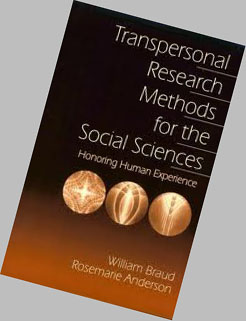
93-126), and In three Appendices of our 1998 research book, Transpersonal Research Methods for the
Social Sciences: Honoring Human Experience (SAGE, 1998), Rosemarie Anderson
and I describe 17 conventional research methods, 5 transpersonal research
approaches, and 6 additional, related research approaches. We tend to use only
a small subset of these 40 possible research approaches and methods in psi
research, in medical research, and in science in general. How might we counter
this narrowness trend?
Note: Information about topics mentioned in Numbers 12 through 20, above, originally was presented in this book chapter:
Braud, William. (2005). The farther reaches of psi research: Future choices and possibilities. In M. A. Thalbourne & L. Storm (Eds.), Parapsychology in the twenty-first century: Essays on the future of psychical research (pp. 38-62). Jefferson, NC: McFarland.
Possible Psychical Research Projects on Survival of Bodily Death
The following eight suggested areas for afterlife research originally were presented, in slightly modified form, in this book chapter:
Braud, William. (2006). Conversations about survival: Novel theoretical, methodological, and empirical approaches to afterlife research. In L. Storm & M. A. Thalbourne (Eds.), The survival of human consciousness: Essays on the possibility of life after death (pp. 75-93). Jefferson, NC: McFarland.
1. There has been relatively little research among psychical researchers in trying to "contact" recently deceased psychical researchers. Quite a few very dedicated parapsychologists and psychical researchers died recently; many of these had very keen interests in survival. Of all people, it would seem they would be highly motivated to contact the living, if they did, indeed, survive in some form. It's strange that there have been so few concerted efforts to contact such persons. This stands in stark contrast to what was attempted, in the early days, when some of the founding members of the Society for Psychical Research, such as Myers, Sidgwick, and Gurney, passed away.
Note: Information about topics mentioned in Numbers 12 through 20, above, originally was presented in this book chapter:
Braud, William. (2005). The farther reaches of psi research: Future choices and possibilities. In M. A. Thalbourne & L. Storm (Eds.), Parapsychology in the twenty-first century: Essays on the future of psychical research (pp. 38-62). Jefferson, NC: McFarland.
Possible Psychical Research Projects on Survival of Bodily Death
The following eight suggested areas for afterlife research originally were presented, in slightly modified form, in this book chapter:
Braud, William. (2006). Conversations about survival: Novel theoretical, methodological, and empirical approaches to afterlife research. In L. Storm & M. A. Thalbourne (Eds.), The survival of human consciousness: Essays on the possibility of life after death (pp. 75-93). Jefferson, NC: McFarland.
1. There has been relatively little research among psychical researchers in trying to "contact" recently deceased psychical researchers. Quite a few very dedicated parapsychologists and psychical researchers died recently; many of these had very keen interests in survival. Of all people, it would seem they would be highly motivated to contact the living, if they did, indeed, survive in some form. It's strange that there have been so few concerted efforts to contact such persons. This stands in stark contrast to what was attempted, in the early days, when some of the founding members of the Society for Psychical Research, such as Myers, Sidgwick, and Gurney, passed away.
2. A useful
approach is to simply "listen" for indications of survival more carefully and
more often. If the discarnate continue to exist in some form, and are trying to
communicate, how many of us are really listening? We keep our time and our
minds extremely busy and occupied virtually incessantly. Metaphorically
speaking, our phones are either busy or off the hook nearly all the time; if
someone were attempting to call, it would be almost impossible for them to get
through. What might happen if psychical researchers simply quieted themselves, unbusy-ed
their minds, and simply made themselves available for possible messages, for
some reasonable time periods each day?
3. Increased
sensitivity and preparation on the part of the listeners would be needed. The
researchers themselves would have to become more adequate to the task, more
skilled in becoming aware of and understanding of subtle thoughts, feelings,
and images that might carry information relevant to afterlives.
4. One of the most
direct ways to explore survival would be to find persons who might be exceptionally
skilled at telepathic attunement, have them connect with the mentation of
persons who are near death, and monitor this mentation as closely and as continuously
as possible. If this would be done, keeping the telepathists 'blind' as to the
time of death of those they were monitoring, it might be possible to note what
happened at the time of death—whether the mentation continued, and in which
form, and for how long. This may seem to be a far out suggestion, but I think
such a study actually could be conducted, with the help of persons in
hospitals, hospices, and so on.
5. Hypnosis might
be used in novel ways. Hypnotic regression could be used to help people who
have had near-death experiences, out-of-body experiences, past-life recall, or
other afterlife-related experiences relive, recall, and better integrate those
experiences. Another approach would be to hypnotically regress persons to early
childhood ages, to help them recall possible past lives—given that past life
memories tend to occur early, then disappear with age. Note that this differs
from using hypnosis and suggestions for recall of past lives themselves. Still
another approach might be to simply hypnotize persons and suggest that they be
more receptive and less resistant to possible afterlife phenomena. This could
increase their sensitivity and allow them to become better detectors of
survival evidence.
6. The typical way
of dealing with the possibility of investigator or participant bias or expectational
influence upon research findings is either to ignore this factor or to reject
findings entirely. However, one can deal with possible investigator and
participant biases more directly by maximizing them, manipulating them, and
assessing their possible roles and interactions. For example, one could use a
2x2 design to compare and contrast the types of past life recall findings that
emerge from participants with two types of belief systems (reality of a past
life existence versus subconscious construction of "memories") who are studied
by two types of investigators (those with strong beliefs in the reality of
survival and past life recall versus those who attribute the information to
subconscious construction). By studying the types of information that emerge
within each of the four "cells" of this 2x2 design, and by studying themes and
details that seem invariant or variant across the conditions, one could emerge
with a better idea of possible interactions of findings with the belief systems
of investigators and participants. The principle could be extended to explore
other types of experiences, as well.
7. Hypnotic, waking
suggestion, and experience-simulation work could be done in which participants
are asked to imagine and fill themselves fully with the cognitive, emotional,
evaluative, volitional, and expectational accompaniments of three survival
alternatives or scenarios, and then act and function on the basis of those
different belief patterns, so that we might be able to observe commonalities
and differences associated with three "as if" answers to the survival question.
The three patterns could be (a) consciousness is an epiphenomenon of brain
functioning that ceases when the body dies; (b) consciousness may persist after
death in a form in which fragments of individuality, specific memories, and
personality characteristics may still be recognizable and which may fade after
some duration; and (c) consciousness continues in a much more persistent but
depersonalized, attribute-free, and nonlocal form. One could study possible
life-impacts of acting as if each of these scenarios were true, and there could
be appropriate follow-ups after various time intervals. Findings might suggest
new insights about the three answers to the survival question that could lead
to new research directions and possibilities not yet obvious to us.
8. The Projective Differential (PD) developed by Peter
Raynolds, which was mentioned above, could be used to study the possibility of
survival of bodily death. The PD procedure can be used to provide profiles of
idiosyncratic meanings of various target referents (e.g., myself, my home
environment, my view of life after death). The PD could be administered to
various persons before their deaths. Later, should any of the deceased be
channeled or their personalities taken on by mediums, the channelers or mediums
could be asked to retake the PD when representing the deceased. The pre-death
and post-life PD profiles could be compared—as an additional indicator of the
possible identity of the source of the post-life PD. As far as I know, the PD
has not yet been used in psychical research, but I think it holds great promise.
For more information relevant to the various projects suggested above, one can consult references cited in some of the suggestions and various relevant papers that I have posted on several pages of this Inclusive Psychology website. In addition, Internet searches of the various topics mentioned can be most useful.
I hope others will find these suggestions for possible research projects helpful.
For more information relevant to the various projects suggested above, one can consult references cited in some of the suggestions and various relevant papers that I have posted on several pages of this Inclusive Psychology website. In addition, Internet searches of the various topics mentioned can be most useful.
I hope others will find these suggestions for possible research projects helpful.
Note: A .pdf version of this article may be downloaded by clicking here.
This
article Copyright © 2011 by William Braud. All rights reserved.
However
novel the experience may have been to me, most people have had similar
experiences, and that the explanation and significance have long been known.
But, occasionally, there may have been some element in it which is really
novel. In that case, though I must be aware of exaggerating its importance
simply because it happened to me, I must neither deny it nor hug it as private
secret, but make it public though all the authorities on each, administrative
or intellectual, should laugh at me or threaten me with penalties. In any case
it is only through the sharing of personal experience, important or trivial,
that our relation with others ceases to be that of one member of a social
species to another and becomes that of one person to another.
~ W. H. Auden
~ W. H. Auden
Double click here to edit this text.
Many Worlds, Many Entries
The One is perfect because it seeks for nothing, and
possesses nothing, and has need of nothing; and being perfect, it overflows,
and thus its superabundance produces an Other. . . . Whenever anything reaches
its own perfection, we see that it cannot endure to remain in itself, but
generates and produces some other thing. Not only beings having the power of
choice, but also those which are by nature incapable of choice, and even
inanimate things, send forth as much of themselves as they can: thus fire emits
heat and snow cold and drugs act upon other things. . . . How then should the
Most Perfect Being and the First Good remain shut up in itself, as though it
were jealous or impotent—itself the potency of all things? . . .Something must therefore be begotten of
it.
~ Plotinus (Enneads V, 2, 1; V, 4, 1; V, 1, 6)
At every occasion where a quantum event has more than one outcome (e.g., when an electron may strike one atom or another) . . . the universe splits into alternative worlds, with one new universe for each and every potential outcome. This is the Many Worlds (MW) interpretation. From the MW viewpoint, the universe is like a tree that branches and re-branches into myriads of new sub-branches with every passing picosecond. And each of these new branch universes has a slightly different sub-atomic "history." Because an observer happens to have followed one particular path through the diverging branches of this Universe-Tree, he never perceives the splitting. . . . Events at the quantum level, of course, must lead to consequences in the every-day world. There should be a MW universe in which every physically possible event has happened. There should be MW universes where the dinosaurs dominate the planet . . . Even as you read this sentence your universe may be fragmenting into a number of branches too large to count.
~ John G. Kramer (physicist)
The universe is vast. Nothing is more curious than the self-satisfied dogmatism with which mankind at each period of its history cherishes the delusion of the finality of its existing modes of knowledge. Sceptics and believers are all alike. At this moment scientists and sceptics are the leading dogmatists. Advance in detail is admitted: fundamental novelty is barred. This dogmatic common sense is the death of philosophical adventure. The universe is vast.
~ Alfred North Whitehead (philosopher)
Many years ago, several of us with backgrounds in physics, psychology, and philosophy enjoyed meeting every Friday evening to discuss topics of interest. One of our participants had invented "The Purpose Game." This involved asking each of us two questions: What is your purpose in life, and what is the purpose of the Universe? Two replies stand out in my memory. In each case the reply applied equally to the two questions and was in the form of a motto. One reply was "To appreciate the universe (in both senses of the word "appreciate"—to increase, to understand)." My own reply was "To realize all possibilities (in both senses of the word "realize"—to make real, actualize; to understand)."
Years later, I discovered that this motto of mine could be understood as a rephrasing of the well-known principle of plenitude, proposed by the Greek philosopher Plato and by the Neo-Platonist and mystical philosopher Plotinus, and taken up by many subsequent theologians and philosophers including Augustine, Pseudo-Dionysius the Areopagite, Aquinas, Descartes, Spinoza, and Leibniz. This principle, along with the related principle of continuity and principle of gradation, formed the basis of the idea of the Great Chain of Being, a major aspect of the perennial philosophy.
The principle of plenitude states, essentially, that the Universe is very full—that any thing that might exist actually does exist, that the Universe and Nature are extremely generous in their productions. The other two principles, of continuity and gradation, indicate that there are smooth connections among all these many things and happenings, with no gaps, with nothing essential missing, and that many of the things and happenings are arranged in orderly hierarchies or holarchies.
The principle of plenitude closely resembles physicist Freeman Dyson's principle of maximum diversity. In his May 9, 2000, acceptance speech for the prestigious Templeton Prize for Progress in Religion, Dyson remarked:
I do not claim any ability to read God's mind. I am sure of only one thing. When we look at the glory of stars and galaxies in the sky and the glory of forests and flowers in the living world around us, it is evident that God loves diversity. Perhaps the universe is constructed according to a principle of maximum diversity. The principle of maximum diversity says that the laws of nature, and the initial conditions at the beginning of time, are such as to make the universe as interesting as possible. As a result, life is possible but not too easy. Maximum diversity often leads to maximum stress. In the end we survive, but only by the skin of our teeth. This is the confession of faith of a scientific heretic. Perhaps I may claim as evidence for progress in religion the fact that we no longer burn heretics.
One might argue, from consideration of the idea of complementarity, which is so evident in many areas, that given that our familiar "this world" exists, it makes sense that there might be a complementary "other world" or "other worlds." We might expand our terminology a bit and address these not only as worlds but also as realms or domains. Some of these are physical and material, but others might be nonphysical and immaterial.
These several worlds often are suggestive of a hierarchy or holarchy, and these arrangements might be considered to be either "horizontal" or "vertical." In the latter case, some of the components of the hierarchy/holarchy are taken to have greater meaning, worth, significance, and reality than others. Religious studies scholar Huston Smith once described the cross as a symbol of the horizontal and vertical aspects of existence, commenting that the vertical part of the cross is longer, to indicate its priority. The relative importance of the two dimensions has been lost sight of in our modern world.
Smith has provided his own take on the big picture of the many worlds, treating them in a four-fold manner. First, he divides them into two: this world and the other world. Then, he divides each of these into two. This world consists of what is visible and what is invisible. The other world consists of what is knowable and what is unknowable.
A purpose of this essay is to briefly indicate the ubiquity of worlds, realms, and domains as a reminder of the many areas in which plenitude, continuity, and gradation show up. I have chosen some of the more obvious examples, which immediately came to mind. Additionally, I mention ways in which we might gain entry/access to some of the worlds we may not yet have experienced, especially those with psychospiritual relevance.
Philosophy
Within the discipline of philosophy, the practice of positing many worlds, realms, or domains has a very long and distinguished history. Space considerations allow mention of but a few examples.
Psychology and Psychiatry
Within psychology and psychiatry, an obvious distinction is that of the conscious and unconscious realms.
The British classicist Frederic William Henry Myers, as early as 1892 and antedating Freud's publications on the "unconscious" by several years, described two worlds, realms, or domains. The first was the familiar supraliminal conscious self. The second realm, which he called the subliminal self, contained a spectrum of experiences and content ranging from the destructive to the inconsequential to the insightful, wise, and transcendent. The subliminal self contained a mix of pathological, collective, and spiritual content. Myers also identified lower, middle, and higher centers within the subliminal self. The contents of this subliminal realm ordinarily were beyond our awareness, except in cases in which some of these contents and ways of knowing, being, and doing spontaneously entered as "uprushes" into our familiar, supraliminal consciousness. One of the properties of the middle center of the subliminal self was its mythopoetic tendency (a term coined by Myers). This is a strong tendency for the unconscious (a term apparently used in English for the first time by Samuel Taylor Coleridge in 1818) to create dramatizations, stories, and myths.
An aside: As late as 1992 we find Elizabeth Loftus and Mark Klinger asking, in an American Psychologist article, whether the unconscious is smart or dumb. In this article, they mention rock groups and George Orwell's 1984 novel but, of course, not a word about F. W. H. Myers. Were Myers around to respond, he would no doubt reply, "Both" and would explain that there are contents of the "unconscious" (the subliminal self) that are wise and some that are unwise, some that are helpful and some that are harmful—that a very wide spectrum is present there.
The best known treatment of the unconscious, of course, is that of Sigmund Freud, who distinguished conscious, preconscious, unconscious realms and processes and also distinguished id, ego, and superego. Freud's identification of the unconscious realm had been anticipated in the ancient Vedas and Upanishads (in which pure consciousness, if considered as a silent, ineffable field of everything yet of nothing, seems to share at least some characteristics of the unconscious), as well as by many later philosophers and writers, including Paracelsus, Shakespeare (who wrote of the unconscious realm without so naming it), Leibniz, Spinoza, Kierkegaard, Schopenhauer, and Nietzsche. It is of interest to note that Schopenhauer was influenced by his reading of the Vedas. Extensive treatments of the many writers who contributed early thoughts about the unconscious can be found in Lancelot Law Whyte's The Unconscious Before Freud and in Henri Ellenberger's The Discovery of the Unconscious.
Carl Gustav Jung built upon and expanded Freud's schema by postulating three realms: the conscious, the personal unconscious (with its idiosyncratic content) and the collective unconscious (a much more inclusive, "nonlocal" realm to which we all contribute and which we all share).
Psychiatrist and transpersonal theorist Stanislav Grof proposed four levels of the human unconscious, corresponding to what he identified as the four major levels or types of the LSD experience. To the usual view of the unconscious, as presented by Freud, with its individual, postnatal, autobiographical content, Grof added another set of experiences as well as two large transbiographical domains. The four areas of the unconscious, in Grof's cartography, are (a) abstract and aesthetic (borrowed from what he encountered in his LSD research), (c) psychodynamic (associated with events in a person's past and present life, usually forgotten or repressed, due to threatening emotions or conflicts), (c) perinatal (related to biological phenomena involved in the various stages of the process of birth), and (d) transpersonal (involving materials that go beyond individual, personal boundaries).
Regarding the unconscious, there exists controversy about how to treat its ontological status. On one view, the unconscious has been reified, given a kind of substantial reality. On another view, the term is used metaphorically—as in Pierre Janet's famous quote: that the subconscious (a term that Janet originated) is "une façon de parler" (a way of speaking). Clearly, the safest way to describe the unconscious is to say that this involves material of which we previously and continuously were unaware and which was "untalkaboutable."
Related psychological concepts and constructs, which have qualities of different worlds, realms, or domains, are dissociated selves, different states of consciousness (waking, dreaming, dreamless sleep, the fourth [transcendental] state, and perhaps certain of the so-called altered states of consciousness). To this list we might add Jean Gebser's five structures of consciousness: archaic, magic, mythic, mental, and integral. I won't describe these in detail. However, their very names tend to convey their nature.
Hinduism
Hinduism describes three worlds: The First World (Bhuloka) of the physical, material universe; The Second World (Antarloka) of the subtle, astral plane, the mental and emotional sphere, occupied by angels, spirits and devas (divine beings); and The Third World (Brahmaloka), the causal plane, the spiritual universe occupied by the, "great shining beings" (Mahadevas), i.e, the gods and highly evolved beings. An alternative classification would describe the three worlds as: Heaven (Svarga), Earth (Bhumi), and The Underworld (Patala) or TheWorld of the Celestials (devaloka), Our Earthly World (manusyaloka), and The Underworld (naraka). Each of these includes several subworlds. In connection with Hinduism, one also might mention the three gunas (basic qualities of all things): tamas (inertia, inactivity), rajas (lability, activity), and sattva (balance, steadiness).
Taoism
In this ancient and venerable psychological, philosophical, and spiritual/wisdom tradition, two basic realms can be distinguished:the Tao and beings (the Ten Thousand Things), otherwise phrased as the Mother (Tao, reality itself) and the sons (the beings of the world, the constructed and perceived reality). One might also mention the two basic qualities of yin and yang.
Buddhism
In Buddhism, we find treatments of three "vertical" realms (Tridhātu): the formless realm (Ārūpyadhātu), the realm of form (Rūpadhātu), and the desire realm (Kāmadhātu)—with many subrealms within each. We might also consider, as different worlds or realms, the various "bardos" (in-between or transitional states) of Tibetan Buddhism, posited especially for afterlife conditions.
Confucianism
Confucianism describes the three basic worlds of earth (nature), humanity, and Heaven.
Kabbalah
The four worlds or planes of existence identified in Kabbalistic teachings, from "lowest" to "highest," are Assiah (action; the realm of completed creation and of human action), Yetzirah (formation; concerned with the nature and power of language, and where created being receives shape and form; a world of angels and intentions), Beri'ah (creation; concerned with creation without shape or form, God, and archetypes), and Atziluth (emanation; with its consciousness of Divine unity; first reception of the Divine light of Ain Soph Aur).
Christianity
Within Christianity, we find descriptions of the very familiar realms of earth, heaven, purgatory, and hell, and also those of matter, body, mind, soul, and spirit—the latter set very closely, and not unexpectedly, aligned with the five major realms of the Great Chain of Being.
Islam and Sufism
Of importance within Sufism are the concepts or constructs of nafs (self), qalb (spiritual heart or spiritual intuition), and ruh (soul or spirit). In his emanation-cosmology, Ibn Arabi described a succession of five worlds or planes of existence: Hadrat al-Dhat (Presence of the Essence, the Absolute Reality), Hadrat al-Af`al (Presence of the Divine Acts, operations, or "Energies"), 'alam al-Malakut (the world of immaterial souls), 'alam al-mithal (the world of Idea-Images, intermediate between matter and spirit). 'alam al-shadadal (the visible world). More generally, in the Sufi system, we have the four cosmological realms: Alam-i-Hahut (Realm of Pre-existence), Alam-i-Lahut (Realm of Divinity), Alam-i-Jabarut (Realm of Power), and Alam-i-Nasut (Realm of Humans).
Indigenous Traditions and Shamanism
The Australian Aborigines distinguish The Dreaming or Dreamtime (spiritual realm, time before time), and the created (familiar physical realm, world of space and time). Important distinctions also are made for the human, physical, and sacred worlds.
In Shamanism, there are three worlds: sky (an overworld of spiritual beings), earth (a middle world of humans, animals, plants, and physical forms), and underworld (a lower world of power animals or helpful animal spirits). One accesses these different worlds for different types of information and to help solve different types of important problems.
Esoteric Systems
Various esoteric systems, such as Theosophy, also posit several worlds, realms, or domains. Often, these are quite similar, if not identical, to those of Hinduism and Buddhism. Common to such systems are various "planes" with their associated "sheaths" or "bodies"—physical, gross, subtle, subtle, astral, etheric, causal, akashic. Several esoteric systems describe two major realms: this present, familiar world and Summerland (the afterlife realm). To mention one more, out of countless others, there are the seven worlds of Rosicrucianism: The World of God, The World of Virgin Spirits, The World of Divine Spirit, The World of Life Spirit, The World of Thought, The Desire World, The Physical World.
Physics
Here are but a few of the many worlds or realms that have been observed or hypothesized by physicists:
Astronomy
In astronomy, one encounters many words quite literally—in the form of physical entities of various sizes and natures. The major forms that these take are dark energy, dark matter, nebulae, galaxies, stars, planets, asteroids, comets, and moons. As I was in the process of writing this essay, I noticed the following, posted on the NASA website:
More is unknown than is known. We know how much dark energy there is because we know how it affects the Universe's expansion. Other than that, it is a complete mystery. But it is an important mystery. It turns out that roughly 70% of the Universe is dark energy. Dark matter makes up about 25%. The rest - everything on Earth, everything ever observed with all of our instruments, all normal matter - adds up to less than 5% of the Universe. Come to think of it, maybe it shouldn't be called "normal" matter at all, since it is such a small fraction of the Universe.
Of course, we have known for some time that some (much?) of our familiar physical world is invisible. These invisibles include things and energies that simply are beyond the detection range of our senses and of our instruments, as well as things (if they can even be called things) at cellular, molecular, atomic, and quantum levels. However, it does seem somewhat shocking that astrophysicists are suggesting that perhaps as much as 95% of the physical universe is dark (invisible). This certainly substantiates Huston Smith's view that some of "this world" is invisible. The first sentence of the NASA quote suggests that regarding "the other world"—to follow Huston Smith's divisions—perhaps as much as 95% of it is unknowable, and only 5% knowable.
In the preceding section, I've mentioned the many worlds in several specific areas. I will treat the many entries "globally" rather than for each area of worlds.
Some of these many worlds are quite familiar and are easily accessed or entered via the eye of the flesh (our conventional senses) and via the eye of the mind (through thinking, reasoning, and reading). However, accessing other worlds, realms, or domains requires the opening and careful use of the eye of the heart (or of the soul or spirit; the eye of contemplation). This is especially true if we wish to access or enter the more subtle, spiritual, sacred realms. For this, various psychospiritual practices can provide useful preparation.
One of the most inclusive presentations of spiritual practices that can allow different forms of entry, suited for persons with different personalities and preferences, is found in the various yogas of Hinduism: hatha yoga (the yoga of the body), karma yoga (the yoga of action), bhakti yoga (the yoga of devotion), jnana yoga (the yoga of knowledge), and raja yoga (the yoga of meditation). One of these, the raja yoga system formalized and codified in the Patanjali Yoga Sutras, describes eight special practices that can be of help in one's spiritual path and help prepare one for entry into other realms of experience. The eight practices ("limbs"), in their developmental sequence, with each building on the previous one, are yama (restraints), niyama (observances), asana (postures), prânâyâma (vital energy/breath control), pratyâhâra (sensory withdrawal), dhâranâ (concentration), dhyâna (meditation), samâdhi (absorption). Because of the importance of these eight practices, the system as a whole sometimes is known as the Eight-Limbed Yoga (ashtanga yoga).
Those wishing to better access some of the more subtle and more "spiritual" realms mentioned in the Many Worlds section above might find the following methods useful:
In engaging in these practices, either alone or in combination, one might have the good fortune of encountering or even entering some of these less familiar worlds, realms, or domains. Such entries can occur sometimes gradually and sometimes suddenly.
A short quotation of Huston Smith may help put some aspects of the Many Worlds in perspective:
While the West was still thinking, perhaps, of a 6,000 years old universe, India was already envisioning ages and eons and galaxies as numerous as the sands of the Ganges: the Universe so vast that modern astronomy slips into its folds without a ripple.
~ Huston Smith
Indeed, the Universe (Multiverse? Pluriverse?) is vast. In my view, it is an honor, a joy—and perhaps even a duty?—to explore, appreciate, realize, honor, care for, and protect as much of it as possible. After all, that might be the reason we're here.
Dyson, Freeman. (1989). Infinite in all directions. New York: Harper and Row.
Dyson, Freeman. (2000). Progress in religion. Acceptance speech for the Templeton Prize, Washington National Cathedral, May 9, 2000. Retrieved May 7, 2011, from http://www.edge.org/documents/archive/edge68.html
Ellenberger, Henri F. (1970). The discovery of the unconscious: The history and evolution of dynamic psychiatry. New York: Basic Books.
Kramer, John G. (October, 1991). Quantum telephones to other universes, to times past: Alternate View Column AV-48. Analog Science Fiction & Fact Magazine. Retrieved May 8, 2011, from http://www.npl.washington.edu/AV/altvw48.html
Loftus, Elizabeth F., & Klinger, Mark R. (1992). Is the unconscious smart or dumb? American Psychologist, 47(6), 761-765.
Lovejoy, Arthur O. (1974). The great chain of being: A study of the history of an idea. Cambridge, MA: Harvard University Press.
National Aeronautics and Space Administration. (n.d.). Dark energy, dark matter. Retrieved May 8, 2011, from http://science.nasa.gov/astrophysics/focus-areas/what-is-dark-energy/
Smith, Huston. (2001). Why religion matters: The fate of the human spirit in an age of disbelief. New York: HarperCollins.
Whitehead, Alfred North. (1948). Essays in science and philosophy. New York: Philosophical Library.
Whyte, Lancelot Law. (1978). The unconscious before Freud. New York: St. Martin's Press.
This essay Copyright © 2011 by William Braud. All rights reserved.
~ Plotinus (Enneads V, 2, 1; V, 4, 1; V, 1, 6)
At every occasion where a quantum event has more than one outcome (e.g., when an electron may strike one atom or another) . . . the universe splits into alternative worlds, with one new universe for each and every potential outcome. This is the Many Worlds (MW) interpretation. From the MW viewpoint, the universe is like a tree that branches and re-branches into myriads of new sub-branches with every passing picosecond. And each of these new branch universes has a slightly different sub-atomic "history." Because an observer happens to have followed one particular path through the diverging branches of this Universe-Tree, he never perceives the splitting. . . . Events at the quantum level, of course, must lead to consequences in the every-day world. There should be a MW universe in which every physically possible event has happened. There should be MW universes where the dinosaurs dominate the planet . . . Even as you read this sentence your universe may be fragmenting into a number of branches too large to count.
~ John G. Kramer (physicist)
The universe is vast. Nothing is more curious than the self-satisfied dogmatism with which mankind at each period of its history cherishes the delusion of the finality of its existing modes of knowledge. Sceptics and believers are all alike. At this moment scientists and sceptics are the leading dogmatists. Advance in detail is admitted: fundamental novelty is barred. This dogmatic common sense is the death of philosophical adventure. The universe is vast.
~ Alfred North Whitehead (philosopher)
Many years ago, several of us with backgrounds in physics, psychology, and philosophy enjoyed meeting every Friday evening to discuss topics of interest. One of our participants had invented "The Purpose Game." This involved asking each of us two questions: What is your purpose in life, and what is the purpose of the Universe? Two replies stand out in my memory. In each case the reply applied equally to the two questions and was in the form of a motto. One reply was "To appreciate the universe (in both senses of the word "appreciate"—to increase, to understand)." My own reply was "To realize all possibilities (in both senses of the word "realize"—to make real, actualize; to understand)."
Years later, I discovered that this motto of mine could be understood as a rephrasing of the well-known principle of plenitude, proposed by the Greek philosopher Plato and by the Neo-Platonist and mystical philosopher Plotinus, and taken up by many subsequent theologians and philosophers including Augustine, Pseudo-Dionysius the Areopagite, Aquinas, Descartes, Spinoza, and Leibniz. This principle, along with the related principle of continuity and principle of gradation, formed the basis of the idea of the Great Chain of Being, a major aspect of the perennial philosophy.
The principle of plenitude states, essentially, that the Universe is very full—that any thing that might exist actually does exist, that the Universe and Nature are extremely generous in their productions. The other two principles, of continuity and gradation, indicate that there are smooth connections among all these many things and happenings, with no gaps, with nothing essential missing, and that many of the things and happenings are arranged in orderly hierarchies or holarchies.
The principle of plenitude closely resembles physicist Freeman Dyson's principle of maximum diversity. In his May 9, 2000, acceptance speech for the prestigious Templeton Prize for Progress in Religion, Dyson remarked:
I do not claim any ability to read God's mind. I am sure of only one thing. When we look at the glory of stars and galaxies in the sky and the glory of forests and flowers in the living world around us, it is evident that God loves diversity. Perhaps the universe is constructed according to a principle of maximum diversity. The principle of maximum diversity says that the laws of nature, and the initial conditions at the beginning of time, are such as to make the universe as interesting as possible. As a result, life is possible but not too easy. Maximum diversity often leads to maximum stress. In the end we survive, but only by the skin of our teeth. This is the confession of faith of a scientific heretic. Perhaps I may claim as evidence for progress in religion the fact that we no longer burn heretics.
One might argue, from consideration of the idea of complementarity, which is so evident in many areas, that given that our familiar "this world" exists, it makes sense that there might be a complementary "other world" or "other worlds." We might expand our terminology a bit and address these not only as worlds but also as realms or domains. Some of these are physical and material, but others might be nonphysical and immaterial.
These several worlds often are suggestive of a hierarchy or holarchy, and these arrangements might be considered to be either "horizontal" or "vertical." In the latter case, some of the components of the hierarchy/holarchy are taken to have greater meaning, worth, significance, and reality than others. Religious studies scholar Huston Smith once described the cross as a symbol of the horizontal and vertical aspects of existence, commenting that the vertical part of the cross is longer, to indicate its priority. The relative importance of the two dimensions has been lost sight of in our modern world.
Smith has provided his own take on the big picture of the many worlds, treating them in a four-fold manner. First, he divides them into two: this world and the other world. Then, he divides each of these into two. This world consists of what is visible and what is invisible. The other world consists of what is knowable and what is unknowable.
A purpose of this essay is to briefly indicate the ubiquity of worlds, realms, and domains as a reminder of the many areas in which plenitude, continuity, and gradation show up. I have chosen some of the more obvious examples, which immediately came to mind. Additionally, I mention ways in which we might gain entry/access to some of the worlds we may not yet have experienced, especially those with psychospiritual relevance.
Many Worlds
Philosophy
Within the discipline of philosophy, the practice of positing many worlds, realms, or domains has a very long and distinguished history. Space considerations allow mention of but a few examples.
- In ancient Indian philosophy, in the Vedas and Upanishads, dating from as early as 2,500 to 3,000 years ago, or perhaps even earlier, we find treatments of the realm of matter and mind (prakrti) and the realm of pure consciousness (purusa), along with distinctions of Brahman and Maya, and of Brahman and Atman. However, these seeming distinctions are said to be the result of ignorance, and these apparent dualities really are one.
- In his various writings, Plato advanced the idea of a world of Forms or Ideas (universals) and a world of substances (particulars).
- The mystical Neo-Platonist philosopher Plotinus proposed the four-part hierarchy of the One, Nous, Soul, and Matter, with each of these "emanating" from the previous one mentioned.
- The existence of many realms is at the heart of the perennial philosophy, in the form of the Great Chain of Being, which can be simplified as consisting of matter, body, mind, soul, and spirit. An extensive treatment of this persistent, pervasive idea can be found in Arthur Lovejoy's The Great Chain of Being.
- Rene Descartes famously contrasted two major realms: the realm of mind and the realm of matter and the body.
- Immanuel Kant distinguished "true reality" (noumenon; das Ding an sich, the thing in itself) from perceived and constructed reality (phenomenon), arguing that we never see things as they really are, due to the very nature of our human perceptual and knowing functions. This distinction is mirrored, today, in the difference between the way things seem to be at the quantum level, compared with how things appear to us at the macroscopic level.
- William James listed seven "worlds"—sensory qualities, physical things, abstract truths, widespread illusions or prejudices, supernatural and mythological worlds, worlds of individual opinion, and those of sheer madness and vagary—and argued that each world was "real" in its own way whenever it was being attended to.
- Karl Popper proposed three worlds, three different but interacting sub-universes. World One is the physical universe of inanimate and animate matter and energy. World Two is the world of subjective experience, the world of mental or psychological states or processes. World Three is the world of the products of the human mind, which continue to exist after being created.
Psychology and Psychiatry
Within psychology and psychiatry, an obvious distinction is that of the conscious and unconscious realms.
The British classicist Frederic William Henry Myers, as early as 1892 and antedating Freud's publications on the "unconscious" by several years, described two worlds, realms, or domains. The first was the familiar supraliminal conscious self. The second realm, which he called the subliminal self, contained a spectrum of experiences and content ranging from the destructive to the inconsequential to the insightful, wise, and transcendent. The subliminal self contained a mix of pathological, collective, and spiritual content. Myers also identified lower, middle, and higher centers within the subliminal self. The contents of this subliminal realm ordinarily were beyond our awareness, except in cases in which some of these contents and ways of knowing, being, and doing spontaneously entered as "uprushes" into our familiar, supraliminal consciousness. One of the properties of the middle center of the subliminal self was its mythopoetic tendency (a term coined by Myers). This is a strong tendency for the unconscious (a term apparently used in English for the first time by Samuel Taylor Coleridge in 1818) to create dramatizations, stories, and myths.
An aside: As late as 1992 we find Elizabeth Loftus and Mark Klinger asking, in an American Psychologist article, whether the unconscious is smart or dumb. In this article, they mention rock groups and George Orwell's 1984 novel but, of course, not a word about F. W. H. Myers. Were Myers around to respond, he would no doubt reply, "Both" and would explain that there are contents of the "unconscious" (the subliminal self) that are wise and some that are unwise, some that are helpful and some that are harmful—that a very wide spectrum is present there.
The best known treatment of the unconscious, of course, is that of Sigmund Freud, who distinguished conscious, preconscious, unconscious realms and processes and also distinguished id, ego, and superego. Freud's identification of the unconscious realm had been anticipated in the ancient Vedas and Upanishads (in which pure consciousness, if considered as a silent, ineffable field of everything yet of nothing, seems to share at least some characteristics of the unconscious), as well as by many later philosophers and writers, including Paracelsus, Shakespeare (who wrote of the unconscious realm without so naming it), Leibniz, Spinoza, Kierkegaard, Schopenhauer, and Nietzsche. It is of interest to note that Schopenhauer was influenced by his reading of the Vedas. Extensive treatments of the many writers who contributed early thoughts about the unconscious can be found in Lancelot Law Whyte's The Unconscious Before Freud and in Henri Ellenberger's The Discovery of the Unconscious.
Carl Gustav Jung built upon and expanded Freud's schema by postulating three realms: the conscious, the personal unconscious (with its idiosyncratic content) and the collective unconscious (a much more inclusive, "nonlocal" realm to which we all contribute and which we all share).
Psychiatrist and transpersonal theorist Stanislav Grof proposed four levels of the human unconscious, corresponding to what he identified as the four major levels or types of the LSD experience. To the usual view of the unconscious, as presented by Freud, with its individual, postnatal, autobiographical content, Grof added another set of experiences as well as two large transbiographical domains. The four areas of the unconscious, in Grof's cartography, are (a) abstract and aesthetic (borrowed from what he encountered in his LSD research), (c) psychodynamic (associated with events in a person's past and present life, usually forgotten or repressed, due to threatening emotions or conflicts), (c) perinatal (related to biological phenomena involved in the various stages of the process of birth), and (d) transpersonal (involving materials that go beyond individual, personal boundaries).
Regarding the unconscious, there exists controversy about how to treat its ontological status. On one view, the unconscious has been reified, given a kind of substantial reality. On another view, the term is used metaphorically—as in Pierre Janet's famous quote: that the subconscious (a term that Janet originated) is "une façon de parler" (a way of speaking). Clearly, the safest way to describe the unconscious is to say that this involves material of which we previously and continuously were unaware and which was "untalkaboutable."
Related psychological concepts and constructs, which have qualities of different worlds, realms, or domains, are dissociated selves, different states of consciousness (waking, dreaming, dreamless sleep, the fourth [transcendental] state, and perhaps certain of the so-called altered states of consciousness). To this list we might add Jean Gebser's five structures of consciousness: archaic, magic, mythic, mental, and integral. I won't describe these in detail. However, their very names tend to convey their nature.
Hinduism
Hinduism describes three worlds: The First World (Bhuloka) of the physical, material universe; The Second World (Antarloka) of the subtle, astral plane, the mental and emotional sphere, occupied by angels, spirits and devas (divine beings); and The Third World (Brahmaloka), the causal plane, the spiritual universe occupied by the, "great shining beings" (Mahadevas), i.e, the gods and highly evolved beings. An alternative classification would describe the three worlds as: Heaven (Svarga), Earth (Bhumi), and The Underworld (Patala) or TheWorld of the Celestials (devaloka), Our Earthly World (manusyaloka), and The Underworld (naraka). Each of these includes several subworlds. In connection with Hinduism, one also might mention the three gunas (basic qualities of all things): tamas (inertia, inactivity), rajas (lability, activity), and sattva (balance, steadiness).
Taoism
In this ancient and venerable psychological, philosophical, and spiritual/wisdom tradition, two basic realms can be distinguished:the Tao and beings (the Ten Thousand Things), otherwise phrased as the Mother (Tao, reality itself) and the sons (the beings of the world, the constructed and perceived reality). One might also mention the two basic qualities of yin and yang.
Buddhism
In Buddhism, we find treatments of three "vertical" realms (Tridhātu): the formless realm (Ārūpyadhātu), the realm of form (Rūpadhātu), and the desire realm (Kāmadhātu)—with many subrealms within each. We might also consider, as different worlds or realms, the various "bardos" (in-between or transitional states) of Tibetan Buddhism, posited especially for afterlife conditions.
Confucianism
Confucianism describes the three basic worlds of earth (nature), humanity, and Heaven.
Kabbalah
The four worlds or planes of existence identified in Kabbalistic teachings, from "lowest" to "highest," are Assiah (action; the realm of completed creation and of human action), Yetzirah (formation; concerned with the nature and power of language, and where created being receives shape and form; a world of angels and intentions), Beri'ah (creation; concerned with creation without shape or form, God, and archetypes), and Atziluth (emanation; with its consciousness of Divine unity; first reception of the Divine light of Ain Soph Aur).
Christianity
Within Christianity, we find descriptions of the very familiar realms of earth, heaven, purgatory, and hell, and also those of matter, body, mind, soul, and spirit—the latter set very closely, and not unexpectedly, aligned with the five major realms of the Great Chain of Being.
Islam and Sufism
Of importance within Sufism are the concepts or constructs of nafs (self), qalb (spiritual heart or spiritual intuition), and ruh (soul or spirit). In his emanation-cosmology, Ibn Arabi described a succession of five worlds or planes of existence: Hadrat al-Dhat (Presence of the Essence, the Absolute Reality), Hadrat al-Af`al (Presence of the Divine Acts, operations, or "Energies"), 'alam al-Malakut (the world of immaterial souls), 'alam al-mithal (the world of Idea-Images, intermediate between matter and spirit). 'alam al-shadadal (the visible world). More generally, in the Sufi system, we have the four cosmological realms: Alam-i-Hahut (Realm of Pre-existence), Alam-i-Lahut (Realm of Divinity), Alam-i-Jabarut (Realm of Power), and Alam-i-Nasut (Realm of Humans).
Indigenous Traditions and Shamanism
The Australian Aborigines distinguish The Dreaming or Dreamtime (spiritual realm, time before time), and the created (familiar physical realm, world of space and time). Important distinctions also are made for the human, physical, and sacred worlds.
In Shamanism, there are three worlds: sky (an overworld of spiritual beings), earth (a middle world of humans, animals, plants, and physical forms), and underworld (a lower world of power animals or helpful animal spirits). One accesses these different worlds for different types of information and to help solve different types of important problems.
Esoteric Systems
Various esoteric systems, such as Theosophy, also posit several worlds, realms, or domains. Often, these are quite similar, if not identical, to those of Hinduism and Buddhism. Common to such systems are various "planes" with their associated "sheaths" or "bodies"—physical, gross, subtle, subtle, astral, etheric, causal, akashic. Several esoteric systems describe two major realms: this present, familiar world and Summerland (the afterlife realm). To mention one more, out of countless others, there are the seven worlds of Rosicrucianism: The World of God, The World of Virgin Spirits, The World of Divine Spirit, The World of Life Spirit, The World of Thought, The Desire World, The Physical World.
Physics
Here are but a few of the many worlds or realms that have been observed or hypothesized by physicists:
- Matter and energy
- The macroscopic realm, the quantum realm, the zero point field (vacuum state)
- Multiple universes: The possible existence of many worlds has been posited as one interpretation of the quantum physics "measurement problem" (this is briefly described in the second epigram at the beginning of this essay).
- The various entities or processes of String Theory
- The various dimensions and the properties and contents of each
- Physicist David Bohm identified three "orders": explicate (manifest and unfolded), implicate (unmanifest and enfolded), and super-implicate (a super-information field of the whole universe that organizes the implicate order, making it nonlinear and organizing it into relatively stable forms with complex structures; a higher-order, super-wave function).
Astronomy
In astronomy, one encounters many words quite literally—in the form of physical entities of various sizes and natures. The major forms that these take are dark energy, dark matter, nebulae, galaxies, stars, planets, asteroids, comets, and moons. As I was in the process of writing this essay, I noticed the following, posted on the NASA website:
More is unknown than is known. We know how much dark energy there is because we know how it affects the Universe's expansion. Other than that, it is a complete mystery. But it is an important mystery. It turns out that roughly 70% of the Universe is dark energy. Dark matter makes up about 25%. The rest - everything on Earth, everything ever observed with all of our instruments, all normal matter - adds up to less than 5% of the Universe. Come to think of it, maybe it shouldn't be called "normal" matter at all, since it is such a small fraction of the Universe.
Of course, we have known for some time that some (much?) of our familiar physical world is invisible. These invisibles include things and energies that simply are beyond the detection range of our senses and of our instruments, as well as things (if they can even be called things) at cellular, molecular, atomic, and quantum levels. However, it does seem somewhat shocking that astrophysicists are suggesting that perhaps as much as 95% of the physical universe is dark (invisible). This certainly substantiates Huston Smith's view that some of "this world" is invisible. The first sentence of the NASA quote suggests that regarding "the other world"—to follow Huston Smith's divisions—perhaps as much as 95% of it is unknowable, and only 5% knowable.
Many Entries
In the preceding section, I've mentioned the many worlds in several specific areas. I will treat the many entries "globally" rather than for each area of worlds.
Some of these many worlds are quite familiar and are easily accessed or entered via the eye of the flesh (our conventional senses) and via the eye of the mind (through thinking, reasoning, and reading). However, accessing other worlds, realms, or domains requires the opening and careful use of the eye of the heart (or of the soul or spirit; the eye of contemplation). This is especially true if we wish to access or enter the more subtle, spiritual, sacred realms. For this, various psychospiritual practices can provide useful preparation.
One of the most inclusive presentations of spiritual practices that can allow different forms of entry, suited for persons with different personalities and preferences, is found in the various yogas of Hinduism: hatha yoga (the yoga of the body), karma yoga (the yoga of action), bhakti yoga (the yoga of devotion), jnana yoga (the yoga of knowledge), and raja yoga (the yoga of meditation). One of these, the raja yoga system formalized and codified in the Patanjali Yoga Sutras, describes eight special practices that can be of help in one's spiritual path and help prepare one for entry into other realms of experience. The eight practices ("limbs"), in their developmental sequence, with each building on the previous one, are yama (restraints), niyama (observances), asana (postures), prânâyâma (vital energy/breath control), pratyâhâra (sensory withdrawal), dhâranâ (concentration), dhyâna (meditation), samâdhi (absorption). Because of the importance of these eight practices, the system as a whole sometimes is known as the Eight-Limbed Yoga (ashtanga yoga).
Those wishing to better access some of the more subtle and more "spiritual" realms mentioned in the Many Worlds section above might find the following methods useful:
- exploring, being with, communing with Nature
- reading (especially writings within the spiritual/wisdom traditions, akin to lectio divina)
- contemplation
- meditation
- cultivating mindfulness
- cultivating devotion
- deep listening (not only to other persons, but to all things)
- engaging in selfless actions
- receiving oral and energetic transmissions from an advanced other (e.g., shakipat)
- learning from one's exceptional and most meaningful experiences and allowing these to help one experience transformative changes; exceptional human experiences (EHEs) are treated in great detail in articles and essays in other sections of this website; two EHEs especially relevant here are the near-death experience (NDE) and the out-of-body experience (OBE)
- being open to, recognizing, and being thankful for influxes of grace ("The winds of grace blow all the time; all we need to do is set our sails": quote attributed to Ramakrishna)
- carrying out Ramana Maharshi's "who am I?" exercise (in which one recognizes, progressively, that one is not one's body, sensations, emotions, images, thoughts, and so on, and considers and experiences what remains once one's identification with these is eliminated)
- recognizing The Divine in all things (persons, animals, plants, rocks, air, water, fire, the manufactured implements one handles daily, every object around one, the elements of chemistry, the particles and energies of physics, the heavenly bodies; one's body, actions, thoughts, images, feelings)
- engaging in shamanic journeying
- engaging in imaginal work (including active imagination and related processes)
- working with and learning from one's dreams
- working with and learning from one's experiences during altered states of consciousness that might either occur spontaneously or be deliberately induced (by, for example, entheogens)
- praying
- unknowing
- loving
- engaging in good deeds
- appreciating music, art, poetry
- noting experiences sometimes associated with serious illnesses, crisis situations, or profound life changes
- realizing that one already has entered the domain one is seeking, that one already is there
In engaging in these practices, either alone or in combination, one might have the good fortune of encountering or even entering some of these less familiar worlds, realms, or domains. Such entries can occur sometimes gradually and sometimes suddenly.
A short quotation of Huston Smith may help put some aspects of the Many Worlds in perspective:
While the West was still thinking, perhaps, of a 6,000 years old universe, India was already envisioning ages and eons and galaxies as numerous as the sands of the Ganges: the Universe so vast that modern astronomy slips into its folds without a ripple.
~ Huston Smith
Indeed, the Universe (Multiverse? Pluriverse?) is vast. In my view, it is an honor, a joy—and perhaps even a duty?—to explore, appreciate, realize, honor, care for, and protect as much of it as possible. After all, that might be the reason we're here.
References
Dyson, Freeman. (1989). Infinite in all directions. New York: Harper and Row.
Dyson, Freeman. (2000). Progress in religion. Acceptance speech for the Templeton Prize, Washington National Cathedral, May 9, 2000. Retrieved May 7, 2011, from http://www.edge.org/documents/archive/edge68.html
Ellenberger, Henri F. (1970). The discovery of the unconscious: The history and evolution of dynamic psychiatry. New York: Basic Books.
Kramer, John G. (October, 1991). Quantum telephones to other universes, to times past: Alternate View Column AV-48. Analog Science Fiction & Fact Magazine. Retrieved May 8, 2011, from http://www.npl.washington.edu/AV/altvw48.html
Loftus, Elizabeth F., & Klinger, Mark R. (1992). Is the unconscious smart or dumb? American Psychologist, 47(6), 761-765.
Lovejoy, Arthur O. (1974). The great chain of being: A study of the history of an idea. Cambridge, MA: Harvard University Press.
National Aeronautics and Space Administration. (n.d.). Dark energy, dark matter. Retrieved May 8, 2011, from http://science.nasa.gov/astrophysics/focus-areas/what-is-dark-energy/
Smith, Huston. (2001). Why religion matters: The fate of the human spirit in an age of disbelief. New York: HarperCollins.
Whitehead, Alfred North. (1948). Essays in science and philosophy. New York: Philosophical Library.
Whyte, Lancelot Law. (1978). The unconscious before Freud. New York: St. Martin's Press.
This essay Copyright © 2011 by William Braud. All rights reserved.
Solo chi ama conosce (Only they who love
know)
~ Elsa Morante
Amor ipse notitia est (Love itself is a form of knowing)
~ Gregory the Great
Love can also know.
~ George Santayana
Love is ever the beginning of Knowledge as fire is of light.
~ Thomas Carlyle
Amor ipse notitia est (Love itself is a form of knowing)
~ Gregory the Great
Love can also know.
~ George Santayana
Love is ever the beginning of Knowledge as fire is of light.
~ Thomas Carlyle



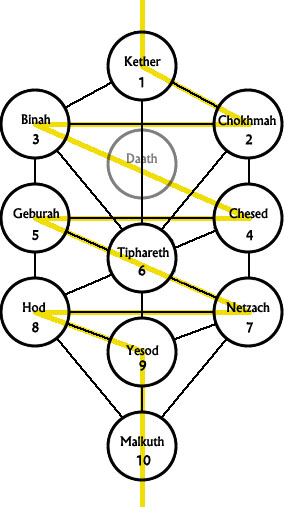




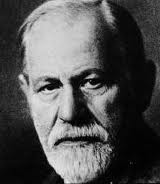


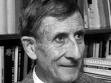
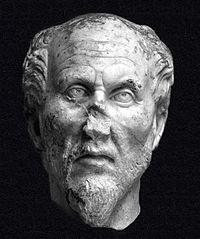
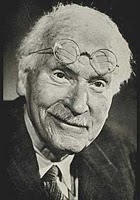
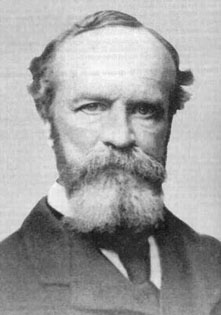
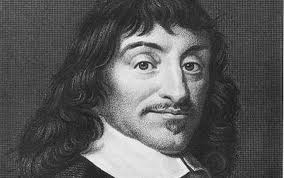
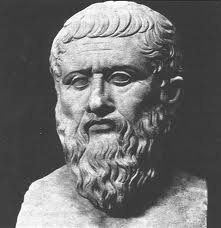
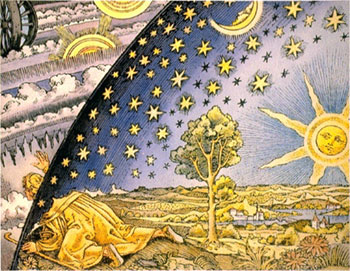


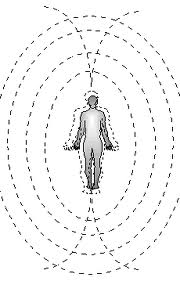


On the
"Beyond" in Transpersonal Psychology:
Advance and Discard or Transcend and
Include?
To study Buddhism is to study the self. To study the self is to forget the self. To forget the self is to be enlightened by all things. To be enlightened by all things is to be free from attachment to the body and mind of one's self and of others. It means wiping out even attachment to Satori. Wiping out attachment to Satori, we must enter actual society.
~ Dogen (1200-1253), Genjokoan (translated by Reiho Masunaga)
He who wants to have right without wrong, order without disorder, does not understand the principles of heaven and earth. He does not know how things hang together.
~ Chuang Tzu (c. 369-286 BCE), Great and Small
Without Contraries [there] is no progression.
~ William Blake (1757–1827), The Marriage of Heaven and Hell
In this essay I address certain temptations that may face theorists and practitioners within transpersonal psychology in their emphasis of the trans (beyond) aspect of the name of this field of study and practice. This will involve considerations in areas of growth, development, advancement, progress, and hierarchy. The discussion will be guided by two principal understandings: (a) that progress is useful only if it is in the right direction, and (b) that a ladder is an appropriate image for hierarchy only if it is recognized that one continues to include and honor all of the ladder's rungs—if not externally, at least within oneself—as one moves up and down on the ladder.
Progress
Enthralled by evolutionary ideas and the latest new thing, many of us have a strong tendency to overvalue the new and undervalue the old. Witness the power of the label "New and Improved!" in advertizing and the extensive belief that "progress" is a necessary and wonderful thing. Of course, there is much truth in this view: In many ways, what is relatively new and recent is superior to the old and earlier. There have been obvious advances in technology, health, information, and knowledge. Modern constructions of structures such as highways, bridges, and skyscrapers are truly amazing.
On the other hand, there have been complementary declines in what we witness today. We are neglecting and endangering our environment, and many present societal conditions (antagonisms between persons and between nations, poverty levels, the ridiculously increased gaps between the wealthy and powerful and the average, poor, and powerless) are troubling. We have allowed the power of what might be called the military-industrial-corporate-political-media-entertainment-advertizing-insurance-pharmaceutical-medical complex to increase to an unwise degree. Although modern constructions are impressive in their magnitudes and efficiencies, one can't help but think that the structures of earlier times, built with more natural materials such as stone and wood, are much more pleasing than our modern structures of steel, glass, and plastic. And although knowledge and scholarship have increased in amount and breadth, they do not appear to have increased in depth, thoroughness, and carefulness. In short, wisdom has not kept up with knowledge. Our present Century seems well described by this stanza of the 1920 poem, "The Second Coming," by Irish poet, playwright, and occultist William Butler Yeats (1865-1939):
Turning and turning in the widening gyre
The falcon cannot hear the falconer;
Things fall apart; the centre cannot hold;
Mere anarchy is loosed upon the world,
The blood-dimmed tide is loosed, and everywhere
The ceremony of innocence is drowned;
The best lack all conviction, while the worst
Are full of passionate intensity.
I mention these things as a reminder that everything in this relative realm of the Ten Thousand Things is Janus-faced, dual-aspected, and that we might think twice before yielding to the temptation to neglect, leave behind, or "go beyond" something in the interest of "progress," simply because it is not the very latest.
Additionally, I mention progress because some considerations that apply to progress also apply to issues of metamorphosis, transmutation, alchemy (especially as this is treated by Coleridge and by Jung), growth, development, and transformation, all of which are very important areas of interest to transpersonal psychology. Aspects of these issues will be treated in various sections of this essay.
Hierarchy and
Holarchy
The topic of hierarchy is treated in detail in the "Ladders, Wheels, and Pancakes: Alternative Metaphors for Appreciating Differences" article on the Short Essays page of this website; so, there is no need to address hierarchy further here. In that article, holons were mentioned only in passing.
South African and British Commonwealth statesman, military leader, and philosopher Jan Christian Smuts (1870-1950) introduced the concept of holism in his 1926 book, Holism and Evolution, and applied the concept extensively and ambitiously to areas of space, time, matter, cells, organisms, mechanism, Darwinism, the mind, human personality, and the Universe. Without mentioning Smuts or his extensive treatment of holism, writer Arthur Koestler (1905-1983), coined the term holon and elaborated the concept in his 1967 book, The Ghost in the Machine. A holon, from the Greek ὅλος (holos "whole"), is something that is simultaneously a whole and a part. If we represent a set of holons by a set of concentric circles or a set of layered spheres, each circle or sphere is smaller and less inclusive than the one(s) that contains it, but at the same time, larger and more inclusive than the one(s) it contains. A familiar physical example of a set of holons is the set of Russian nested dolls (matryoshkas). Here, the one-above-or-below-the-other aspect of the linear, ladder-like hierarchy is replaced by a one-inside-or-outside-of-the-other aspect. Writer and integral theorist Ken Wilber (born 1949) uses the holon concept extensively in his most recent thinking. His listing of the various properties of holons is identical to that of Koestler, although he does not include or address several of the latter's holonic principles.
There is an important exception to the idea that each part of a holon set—which could be called a holarchy, as an alternative to a hierarchy—and that is that this does not apply to the largest and smallest extremes. This would seem to be inconsistent with Koestler's contention that wholes and parts in an absolute sense do not exist anywhere. It is curious that neither Koestler nor Wilber seem to have noticed or addressed this. Of course, this assumes that there really are extremes, that the two extremes are not open-ended, and that even more extreme holons will not be discovered and added to the set (holarchy)—all of which assumptions are questionable.
In drawing holons, as concentric circles, to represent the Great Chain of Being (or, better, the Great Holarchy of Being)—in its simplified version of matter, body, mind, soul, and spirit—one notices something interesting: that such a diagram might be labeled and interpreted in two opposite ways. If matter is placed in the innermost circle and spirit in the outermost (as this usually is drawn by Huston Smith, Ken Wilber, and others), this does suggest that spirit is the most inclusive, most commodious of the five holons so represented: It contains all other holons, whereas matter is the least inclusive, least commodious, and contains no other holons. This approach seems well aligned with a transcendent view of spirit. However, this presentation also could suggest that because whatever is in a smaller circle is present within all of the larger ones, the former (smaller circle) is more fundamental than the latter (which are present in fewer circles). These two methods of circle labeling and interpretation are suggestive of the difference between what is fundamental, necessary, and useful (inner circle labeled with what is most important) vs. what is of greatest significance and worth (outer circle labeled with what is most important). If the circle labeling is reversed, with spirit at the inner circle and matter at the outer circle, this would reverse the interpretations, and this labeling and interpretation approach could be aligned with an immanent view of spirituality, in that spirit, as the innermost circle (holon), would be present in all other circles (holons). The spirit of what is discussed in this present paragraph is closely related to the thoughts that might be suggested by this simple sentence: The fish is in water, and water is in the fish.
A final word about holons: The nature, laws, what is possible or impossible, and what is revealed or concealed may differ, perhaps even drastically, for different holons or for different holonic levels.
Three Ways of Treating Earlier or "Lower" Areas
As one "ascends" a ladder-like hierarchy or experiences more inclusive holons, in the course of one's psychospiritual growth and development, there would seem to be three major ways of treating the phases experienced earlier. Here, we will not be concerned with whether those prior phases are discrete stages or experiences of continuous change.
Pattern 1. The lower phases (earlier conditions of knowing, being, and doing) are left behind; they either no longer exist or exist in a very minimal, rudimentary, vestigial, unused form (such as the human vermiform appendix or tail bone). Nonhuman examples of this pattern include the metamorphosis of frogs (from egg to tadpole to adult frog), moths and butterflies (from caterpillar to pupa/chrysalis to adult butterfly), and some fish. Human examples include the process of apoptosis (preprogrammed cell death), the disappearance of certain reflexes (plantar, Babinski) with age, and the earlier ways of functioning treated by theorists of areas of cognitive, psychosocial, ego, moral, and faith development. This could be called an advance and discard pattern.
Pattern 2. The lower phases continue to exist, just as before, and may be revisited or not. In the ladder-like, linear hierarchy model, the lower ladder rungs remain and remain unchanged; in the holon model, the inner holons (circles or sphere layers) remain and remain unchanged. For our purposes, this will be called the transcend and include, version 1 pattern. Within transpersonal psychology, examples of this pattern include the process of dealing with the hierarchy of needs proposed by Abraham Maslow (1908-1970), the models of psychospiritual development proposed by Michael Washburn (born 1943) and by Hillevi Ruumet (born 1938; please see, in the description of Pattern 3 below, a possible qualification of the fittingness of her model with this Pattern 2), and many of the processes described in this present essay (growths and developments in areas of methods, knowledge, and understandings).
Regarding Maslow's model of human needs, it would be absurd to think that once one reaches a "higher" level, the "lower" levels would not longer be present or necessary. When one climbs a ladder to the top rung, the lower rungs remain.
In Washburn's model, one returns to an earlier phase in the process of "regression in the service of transcendence." In Washburn's words,
Human development follows a spiral course as the ego emerges from, loses touch with, and then reintegrates itself on a higher level with the depth-psychological and interpersonal bases of its being. This interpretation of development gives psychological formulation to the spiritual archetype of life as a path, way, pilgrimage or journey of departure from and return "home"—the home to which we return both is the same as the home from which we departed (because it has the same deep foundations) and is not the same (because it is a multi-leveled mansion built upon those foundations rather than only the foundations themselves).
In her 2006 book, Pathways Of The Soul: Exploring The Human Journey, transpersonal psychologist Hillevi Ruumet presented a model of psychospiritual growth and development based on a helical journey through seven centers, somewhat related to the seven main chakras described in the Hindu tradition and in other wisdom traditions. Each center might be considered a holon, and the set of seven of these a holarchy. She named the seven centers as follows: Center 1-Physical Survival, Center 2-Emotional/Kinship, Center 3-Egoic/Power, Center 4-Aloha, Center 5-Star, Center 6-Sophia, Center 7-Transpersonal. The drawing below illustrates a typical path through the seven centers. Note that the path has both linear and clockwise spiraling aspects. The spiraling indicates the tendency to revisit still existing earlier centers, phases, or holons—either to work out unfinished business at those levels, to learn more from them, or simply for the joy of reexperiencing them. Ruumet has observed that these revisitations are not random, but occur in particular patterns, involving movements from Center 4 to Center 3 (the Aloha Waltz), from Center 5 to Center 2 (the Descent Tango), and from Center 6 to Center 1 (the Sophia Task), each of these occurring before authentic movements "upward" to the next "higher" center become possible. It can be appreciated that the two centers involved in each of these three revisitation "dances" are in some way complementary (or contraries, as William Blake would call them: "Without Contraries [there] is no progression").
Pattern 3. The
lower phases continue to exist, but in altered forms, and may continue to serve
useful purposes in appropriate situations. Examples of this transcend and include, version 2 pattern
include the vermiform appendix in humans, an alternative view of Hillevi
Ruumet's model, the functions and representations of the human ego or self
(according to views of the Dalai Lama and of Mark Epstein), and a treatment of
different theories in physics.
The human vermiform appendix was mentioned in Pattern 1 above. This is because it typically is considered a vestigial organ--one that once served a function but no longer does. However, some recent evidence suggests that currently the appendix may harbor and protect bacteria that are beneficial in the functioning of the human colon, and some have suggested that the appendix may play a role in immune functioning and hormonal functioning, in fetuses and in adults. If the appendix is indeed vestigial and currently is functionless, then it would fit Pattern 1. If it is vestigial but now has assumed new functions, then it would fit Pattern 3. If it is not vestigial, but always has existed with its present form and functioning, then it would fit Pattern 2.
Ruumet's helical model already was treated as an example of Pattern 2. This is because the model involves revisitations to earlier centers, phases, or holons that are still existing. If we consider the general nature of the earlier centers themselves, they do continue to exist as they did previously. However, if we consider the ways they are revisited and how they might be perceived, interpreted, and understood, as a result of having advanced beyond them, having learned more and changed, and then having returned, then the earlier centers could be considered not quite the same. Therefore, in this view, the model could also be viewed as an example of Pattern 3.
A third example of Pattern 3, involves a particular view of the nature of "ego" or "self": how this exists (or, as some maintain, does not exist) and how one might treat it in the course of psychospiritual development. I recognize that in several psychological and spiritual traditions, there are important differences between "ego" and "self" and, more important, between "ego" and "Self." However, for present purposes I am treating "ego" and "self" together and similarly. According to the understanding presented here, ego/self exists in a certain way, has a certain nature, and has several important functions. In the course of psychospiritual development, the ego/self continues to exist, as do its original functions. However, some functions might change, additional functions may be added, and one's interpretation and understanding of the nature of the ego/self changes. Because of these two-fold changes, in functions and representations, this view can serve as a fitting example of Pattern 3. This view will be elaborated more fully in the Treatments of "The Ordinary" section below.
Outside of transpersonal psychology, the two transcend and include patterns (versions 1 and 2) apply to adequate models and theories within the natural sciences. I use the term "adequate" to distinguish these from theories that are found to be erroneous. In physics, for example, we often hear that Newtonian laws, theories, models, and conceptualizations have been superseded by Einsteinian and Quantum laws, theories, models, and conceptualizations, and that the former no longer are valid. This is not so. Newtonian laws continue to operate in their appropriate realm—the familiar macrophysical realm in which humans continue to function. It may be true that Newtonian principles and predictions are merely subsets or special cases of the more general relativistic and quantum laws, but that is exactly the point, The Newtonian laws did not suddenly become invalid and disappear with the discoveries of relativistic and quantum physics. They remain just as valid as before, but we now interpret them differently, recognizing that they apply only under certain conditions (which conditions account for virtually 100% of what humans encounter here on earth). As in transcend and include, version 1, the nature of the Newtonian laws remain the same as they were before their limitations were discovered. As in transcend and include, version 2, our interpretations and understandings of those laws have changed.
Research Methods and Approaches
Many years ago, several Institute of Transpersonal Psychology students presented their research projects at an American Psychological Association convention. Some of the humanistic/transpersonal investigators who were present challenged the students about their use of research designs that included both qualitative and quantitative components, asking whether, in doing the latter, they were "going over to the other side"—i.e., using a method favored by the more established (behavioral/cognitive) psychologists whose approaches they felt were inappropriate for humanistic and transpersonal studies. The students rightly replied that a both-and approach was a wise one and one that could more fully illuminate whatever was being studied, in contradistinction to a narrower either-or approach. Even today, it is not unusual to find some transpersonal psychologists who argue that using research methods that originated within the behaviorist/cognitive tradition—such as standardized assessments, experimental designs, and quantitative analyses—never are appropriate for studying transpersonal topics, and that to do so would be engaging in regressive behavior. Obviously, I do not agree with such a position. Rather, it seems much more appropriate to have as many different tools as possible in one's methodological toolkit and to use whichever methods are most fitting for the kinds of research questions one is asking at the moment. Such a pluralistic methodological approach seems much more likely to yield richer information than would a narrower approach relying on only one method or few methods. Here, one continues to use formerly used methods, rather than discarding them.
Treatment of Psychological Principles Originating in Other Schools or Forces
Many consider transpersonal psychology to be a fourth school or "force" within psychology, following and "going beyond" the three previous forces of behaviorism, psychoanalysis, and humanistic psychology. One may rightly criticize aspects of the first three forces, perhaps even for their respective central tenets. Such tenets include behaviorism's rejection of consciousness, its modeling itself after 19th or even 18th century physics, which physics itself has long surpassed, and its subject matter and methods; psychoanalysis's (nearly exclusive) emphasis on pathology, on very early childhood experiences, and on a seething cauldron of (mostly sexual) excitations as the source of our motives, goals, and aspirations; and humanistic psychology's overemphasis of strictly human concerns and its underemphasis of spiritual matters. However, there are those to go too far in their condemnations. An example of this is the writer Arthur Koestler, whose works I generally greatly admire, who devoted much of his 1967 book The Ghost in the Machine to attacking behaviorism, calling it, simply, "rat psychology." (One would commit a similar error if one were to call transpersonal psychology "spook psychology" or "a psychology that takes fairy tales seriously.")
Many useful methods, theories, models, and findings have arisen within behaviorism, psychoanalysis, and humanistic psychology, and to reject these would be, I think, narrow-minded and unwise. Researchers in areas of social psychology, learning, memory, and motivation, within behaviorism, have identified various principles that certainly are active in all of us and which, if we learned more about them, we could use to our advantage, even in our psychospiritual development. A few of these, from learning theory, include
· the important role that classical (Pavlovian) conditioning plays in physiological and emotional areas, which are especially susceptible to this form of conditioning;
· the finding that gradients of approach and avoidance tendencies toward or away from some ambivalent (better, bivalent) goal have different steepnesses (the avoidance gradient is steeper) can be useful in considering conflict situations and how they may or may not be resolved;
· the finding, from operant (Skinnerian) conditioning studies, that different reinforcement schedules have very different effects and time courses (especially different resistances to extinction) can be useful in understanding the persistence of some of our eventually maladaptive behaviors;
· the findings, from human verbal learning studies, regarding proactive and retroactive interference processes in memory can help us understand why recall becomes more difficult with aging (I find it strange that this never seems to be mentioned in connection with age-related memory declines);
· Even sensations and images can be classically conditioned. A simple observation of this is to note what happens to one's auditory images when one listens repeatedly to certain musical CDs: One can actually hear the beginning of the next selection before it begins to play—an instance of auditory conditioning;
· Although despised by many in the humanistic and transpersonal psychology fields, therapeutic interventions (behavior therapy, applied behavioral analysis) based on classical (Pavlovian) and instrumental/operant (Skinnerian) learning principles have been successfully used and have helped many adults and children over the decades.
I am convinced that many, if not most, of the findings in the learning, memory, and motivation areas, even those based on studies of rats and pigeons, are quite real and important, and can influence even complex human behaviors. These are truly generalizable principles, not crude analogies. Similar points can be made regarding findings and theories within the psychoanalysis and humanistic psychology areas.
Time Frame of Scholarship
Some scholars within transpersonal psychology, and indeed within all areas of modern scholarship, have succumbed to the temptation of limiting themselves to only the most recent studies and writings in their scholarly reviews and published reports. This seems to be but another aspect of a pervasive syndrome of overvaluing the latest new thing. Such limited time frame literature reviews and other treatments carry with them the questionable implication that all knowledge has an expiration date—that findings and thoughts older than 5 years or so can be discounted as no longer valid or applicable. Although progress undoubtedly has been made in many areas, chiefly in terms of technology, there are many instances in which early thinking and work rival and sometimes even surpass more recent efforts. It seems unwise to ignore or disdain important findings merely because they were published some time ago. In some cases, modern workers may not even be aware of the existence of relevant early work. Such ignorance is an insult to the practice of good scholarship.
We could delve more deeply into older works. In the grocery business, it is common practice to "rotate one's stock"—making older materials more accessible so that they have a chance of being purchased and used, rather than languishing out of reach. We tend to reverse this practice in our scholarly and empirical work—emphasizing the very latest reports, methods, and data, and ignoring older thoughts and findings as though they have passed their expiration dates. One consequence of a lack of awareness or valuing of earlier thoughts, findings, and writings is a continuing inadvertent reinvention of the wheel—and with, perhaps, less enduring and less effective materials—by current researchers. How wise is this practice?
It is generally assumed that the growth curve for the accumulation of knowledge is exponential—i.e., early increments in knowledge are relatively small but later become larger and larger (see the Figure below). This is undoubtedly true in cases involving technology and in knowledge involving phenomena that depend upon recent technology for their detection and study (e.g., studies of the very small, very large, and very fast, in physics, astrophysics, biology, and medicine). However, there are two other kinds of growth curves that may characterize knowledge accumulation in other areas. One of these is a linear curve, in which the increasing growth of knowledge over time is fairly consistent, neither speeding up nor slowing down in later periods, compared with earlier periods. Another is a logarithmic curve, in which knowledge growth is very rapid in its early phases, quickly reaching a high point, and then growing only very slowly thereafter.
The human vermiform appendix was mentioned in Pattern 1 above. This is because it typically is considered a vestigial organ--one that once served a function but no longer does. However, some recent evidence suggests that currently the appendix may harbor and protect bacteria that are beneficial in the functioning of the human colon, and some have suggested that the appendix may play a role in immune functioning and hormonal functioning, in fetuses and in adults. If the appendix is indeed vestigial and currently is functionless, then it would fit Pattern 1. If it is vestigial but now has assumed new functions, then it would fit Pattern 3. If it is not vestigial, but always has existed with its present form and functioning, then it would fit Pattern 2.
Ruumet's helical model already was treated as an example of Pattern 2. This is because the model involves revisitations to earlier centers, phases, or holons that are still existing. If we consider the general nature of the earlier centers themselves, they do continue to exist as they did previously. However, if we consider the ways they are revisited and how they might be perceived, interpreted, and understood, as a result of having advanced beyond them, having learned more and changed, and then having returned, then the earlier centers could be considered not quite the same. Therefore, in this view, the model could also be viewed as an example of Pattern 3.
A third example of Pattern 3, involves a particular view of the nature of "ego" or "self": how this exists (or, as some maintain, does not exist) and how one might treat it in the course of psychospiritual development. I recognize that in several psychological and spiritual traditions, there are important differences between "ego" and "self" and, more important, between "ego" and "Self." However, for present purposes I am treating "ego" and "self" together and similarly. According to the understanding presented here, ego/self exists in a certain way, has a certain nature, and has several important functions. In the course of psychospiritual development, the ego/self continues to exist, as do its original functions. However, some functions might change, additional functions may be added, and one's interpretation and understanding of the nature of the ego/self changes. Because of these two-fold changes, in functions and representations, this view can serve as a fitting example of Pattern 3. This view will be elaborated more fully in the Treatments of "The Ordinary" section below.
Outside of transpersonal psychology, the two transcend and include patterns (versions 1 and 2) apply to adequate models and theories within the natural sciences. I use the term "adequate" to distinguish these from theories that are found to be erroneous. In physics, for example, we often hear that Newtonian laws, theories, models, and conceptualizations have been superseded by Einsteinian and Quantum laws, theories, models, and conceptualizations, and that the former no longer are valid. This is not so. Newtonian laws continue to operate in their appropriate realm—the familiar macrophysical realm in which humans continue to function. It may be true that Newtonian principles and predictions are merely subsets or special cases of the more general relativistic and quantum laws, but that is exactly the point, The Newtonian laws did not suddenly become invalid and disappear with the discoveries of relativistic and quantum physics. They remain just as valid as before, but we now interpret them differently, recognizing that they apply only under certain conditions (which conditions account for virtually 100% of what humans encounter here on earth). As in transcend and include, version 1, the nature of the Newtonian laws remain the same as they were before their limitations were discovered. As in transcend and include, version 2, our interpretations and understandings of those laws have changed.
Abandonment Temptations
in Attempts to "Go Beyond"
Research Methods and Approaches
Many years ago, several Institute of Transpersonal Psychology students presented their research projects at an American Psychological Association convention. Some of the humanistic/transpersonal investigators who were present challenged the students about their use of research designs that included both qualitative and quantitative components, asking whether, in doing the latter, they were "going over to the other side"—i.e., using a method favored by the more established (behavioral/cognitive) psychologists whose approaches they felt were inappropriate for humanistic and transpersonal studies. The students rightly replied that a both-and approach was a wise one and one that could more fully illuminate whatever was being studied, in contradistinction to a narrower either-or approach. Even today, it is not unusual to find some transpersonal psychologists who argue that using research methods that originated within the behaviorist/cognitive tradition—such as standardized assessments, experimental designs, and quantitative analyses—never are appropriate for studying transpersonal topics, and that to do so would be engaging in regressive behavior. Obviously, I do not agree with such a position. Rather, it seems much more appropriate to have as many different tools as possible in one's methodological toolkit and to use whichever methods are most fitting for the kinds of research questions one is asking at the moment. Such a pluralistic methodological approach seems much more likely to yield richer information than would a narrower approach relying on only one method or few methods. Here, one continues to use formerly used methods, rather than discarding them.
Treatment of Psychological Principles Originating in Other Schools or Forces
Many consider transpersonal psychology to be a fourth school or "force" within psychology, following and "going beyond" the three previous forces of behaviorism, psychoanalysis, and humanistic psychology. One may rightly criticize aspects of the first three forces, perhaps even for their respective central tenets. Such tenets include behaviorism's rejection of consciousness, its modeling itself after 19th or even 18th century physics, which physics itself has long surpassed, and its subject matter and methods; psychoanalysis's (nearly exclusive) emphasis on pathology, on very early childhood experiences, and on a seething cauldron of (mostly sexual) excitations as the source of our motives, goals, and aspirations; and humanistic psychology's overemphasis of strictly human concerns and its underemphasis of spiritual matters. However, there are those to go too far in their condemnations. An example of this is the writer Arthur Koestler, whose works I generally greatly admire, who devoted much of his 1967 book The Ghost in the Machine to attacking behaviorism, calling it, simply, "rat psychology." (One would commit a similar error if one were to call transpersonal psychology "spook psychology" or "a psychology that takes fairy tales seriously.")
Many useful methods, theories, models, and findings have arisen within behaviorism, psychoanalysis, and humanistic psychology, and to reject these would be, I think, narrow-minded and unwise. Researchers in areas of social psychology, learning, memory, and motivation, within behaviorism, have identified various principles that certainly are active in all of us and which, if we learned more about them, we could use to our advantage, even in our psychospiritual development. A few of these, from learning theory, include
· the important role that classical (Pavlovian) conditioning plays in physiological and emotional areas, which are especially susceptible to this form of conditioning;
· the finding that gradients of approach and avoidance tendencies toward or away from some ambivalent (better, bivalent) goal have different steepnesses (the avoidance gradient is steeper) can be useful in considering conflict situations and how they may or may not be resolved;
· the finding, from operant (Skinnerian) conditioning studies, that different reinforcement schedules have very different effects and time courses (especially different resistances to extinction) can be useful in understanding the persistence of some of our eventually maladaptive behaviors;
· the findings, from human verbal learning studies, regarding proactive and retroactive interference processes in memory can help us understand why recall becomes more difficult with aging (I find it strange that this never seems to be mentioned in connection with age-related memory declines);
· Even sensations and images can be classically conditioned. A simple observation of this is to note what happens to one's auditory images when one listens repeatedly to certain musical CDs: One can actually hear the beginning of the next selection before it begins to play—an instance of auditory conditioning;
· Although despised by many in the humanistic and transpersonal psychology fields, therapeutic interventions (behavior therapy, applied behavioral analysis) based on classical (Pavlovian) and instrumental/operant (Skinnerian) learning principles have been successfully used and have helped many adults and children over the decades.
I am convinced that many, if not most, of the findings in the learning, memory, and motivation areas, even those based on studies of rats and pigeons, are quite real and important, and can influence even complex human behaviors. These are truly generalizable principles, not crude analogies. Similar points can be made regarding findings and theories within the psychoanalysis and humanistic psychology areas.
Time Frame of Scholarship
Some scholars within transpersonal psychology, and indeed within all areas of modern scholarship, have succumbed to the temptation of limiting themselves to only the most recent studies and writings in their scholarly reviews and published reports. This seems to be but another aspect of a pervasive syndrome of overvaluing the latest new thing. Such limited time frame literature reviews and other treatments carry with them the questionable implication that all knowledge has an expiration date—that findings and thoughts older than 5 years or so can be discounted as no longer valid or applicable. Although progress undoubtedly has been made in many areas, chiefly in terms of technology, there are many instances in which early thinking and work rival and sometimes even surpass more recent efforts. It seems unwise to ignore or disdain important findings merely because they were published some time ago. In some cases, modern workers may not even be aware of the existence of relevant early work. Such ignorance is an insult to the practice of good scholarship.
We could delve more deeply into older works. In the grocery business, it is common practice to "rotate one's stock"—making older materials more accessible so that they have a chance of being purchased and used, rather than languishing out of reach. We tend to reverse this practice in our scholarly and empirical work—emphasizing the very latest reports, methods, and data, and ignoring older thoughts and findings as though they have passed their expiration dates. One consequence of a lack of awareness or valuing of earlier thoughts, findings, and writings is a continuing inadvertent reinvention of the wheel—and with, perhaps, less enduring and less effective materials—by current researchers. How wise is this practice?
It is generally assumed that the growth curve for the accumulation of knowledge is exponential—i.e., early increments in knowledge are relatively small but later become larger and larger (see the Figure below). This is undoubtedly true in cases involving technology and in knowledge involving phenomena that depend upon recent technology for their detection and study (e.g., studies of the very small, very large, and very fast, in physics, astrophysics, biology, and medicine). However, there are two other kinds of growth curves that may characterize knowledge accumulation in other areas. One of these is a linear curve, in which the increasing growth of knowledge over time is fairly consistent, neither speeding up nor slowing down in later periods, compared with earlier periods. Another is a logarithmic curve, in which knowledge growth is very rapid in its early phases, quickly reaching a high point, and then growing only very slowly thereafter.
Figure: Three possible time courses
for the accumulation of knowledge.
It may well be that the growth curve for the most important and meaningful knowledge within psychology, philosophy, and transpersonal psychology is logarithmic in nature—largely acquired very early and incremented only slightly thereafter. This is because the subject matter in these disciplines—our own behaviors, thoughts, feelings, and images—were readily available for our observation and conceptualization at very early stages of our development. These processes and observations were parts of everyday life, even during our very earliest days as a species and as individuals. (The same conclusion may also be true for knowledge gains involving naked-eye astronomy and for observations of the natural world of plants and animals—in these cases, the subject matter was generally available and accessible to all at very early dates.) This perspective on knowledge accumulation is consistent with the well-known comment of philosopher Alfred North Whitehead (1929) that "the safest general characterization of the European philosophical tradition is that it consists of a series of footnotes to Plato" (p. 63), as well as with a statement made by Sigmund Freud (1856-1939) in an 1896 letter to the German otolaryngologist and, at least initially, his close friend and confidant Wilhelm Fliess (1858-1928): "It is the oldest ideas which are the most useful, as I am belatedly finding out" (Freud, 1954, p. 157). These considerations may help us resist the temptation to neglect, devalue, or discard early knowledge claims simply because they are old or even ancient.
Here follow just a few specific examples of earlier treatments that anticipated and sometimes rivaled similar, but much later, treatments:
The writings of the Greek atomists Leucippus and Democritus (about 450 BCE) about the atomic underpinnings and foundations of matter are well known. Not as well known are the similar but even earlier thoughts of the Hindu philosopher Kanada (500 BCE), who wrote:
The mote which is seen in the sunbeam is the smallest perceptible quantity. This again must be composed of what is smaller, and that smaller thing is an atom. It is simple and uncomposed, else the series would be endless, and were it pursued indefinitely there would be no difference in magnitude between a mustard seed and a mountain, a gnat and an elephant, each alike containing an infinite number of particles. The ultimate atom is therefore simple. (cited in LeShan & Margenau, 1982, p. 93)
Frederic William Henry Myers (1843–1901) was a classical scholar, poet, philosopher who in 1892 and even as early as 1884-1885 developed and published his ideas about the unconscious and the subliminal self, which anticipated and in some cases, especially in the case of the subliminal self and its great range of content, surpassed later treatments of "the unconscious" by Sigmund Freud and others. In describing a spectrum of consciousness, Myers also anticipated the later work of Ken Wilber, along these lines, by about 85 years.
In his art and writings, poet and painter William Blake (1757–1827) anticipated the later work of both Sigmund Freud and Carl Jung (1875-1961). Early in the 1930s, poet W. H. Auden declared that "the whole of Freud's teaching may be found in [Blake's] The Marriage of Heaven and Hell." Blake also anticipated the four psychological functions later elaborated by Carl Jung. In the "fourfold vision" of his own poetic mythology, Blake invented four Zoas—titanic, mythic Eternals, Giant Forms, living archetypes. Blake named these Urizen (intellect, reason), Tharmas (sensation, body), Luvah (love, passion, feeling, heart), and Urthona-Los (imagination, intuition, poetic genius).
The English Romantic poet, literary critic, and philosopher Samuel Taylor Coleridge (1772-1834), who wrote that metaphysics and psychology were his "hobbyhorse" (an old term for a favorite topic that one frequently refers to or dwells on; a fixation; later shortened to hobby) apparently was the first person to use the term the unconscious in the English language (in his On Poesy and Art, 1818), and he wrote extensively (especially in his Biographia Literaria, 1818) about the nature and functions of consciousness and unconsciousness. He also anticipated many of the later thoughts of Carl Jung, in using many terms suggestive of alchemy and, more particularly, in his writings about individuation (in his Hints Towards the Formation of a More Comprehensive Theory of Life, unfinished, posthumously published in 1848). Here are two representative quotes—the first from his 1818 On Poesy and Art essay, the second from his unfinished 1848 Hints Towards the Formation of a More Comprehensive Theory of Life book:
To make the external internal, the internal external, to make nature thought and thought nature—this is the mystery of genius in the Fine Arts. Dare I add that the genius must act on the feeling, that body is but a striving to become mind—that it is mind in its essence! [WB: Is this not reminiscent of Jung's psychoid level wherein matter and mind are one?]
In every work of art there is a reconcilement of the external with the internal; the conscious is so impressed on the unconscious [italics added] as to appear in it; as compare mere letters inscribed on a tomb with figures themselves constituting the tomb. He who combines the two is the man of genius; and for that reason he must partake of both. Hence there is in genius itself an unconscious activity; nay, that is the genius in the man of genius. (Coleridge, 1965, p. 204)
I define life as the principle of individuation, or the power which unites a given all into a whole that is presupposed by all its parts. The link that combines the two, and acts through both, will of course, be defined by the tendency to individuation. (Coleridge, 1951, p. 573)
Psychologist and philosopher William James (1842-1910), of course, treated many of the topics with which contemporary transpersonal psychology concerns itself—spirituality, mysticism, psychical functioning, pluralism, radical empiricism, and others. The nature of these particular contributions, described in writings published between 1897 and 1912, some posthumously, are quite familiar to transpersonal psychologists and need not be further described here.
Psychic Functioning and "Extrapersonal" States
Another area that some strongly encourage us to move beyond and leave behind is the area of psychical functioning. This area includes experiences and phenomena such as telepathy, clairvoyance, precognition, psychokinesis, remote healing, and various phenomena suggestive of survival of bodily death that are treated in the disciplines of psychical research and parapsychology. Some—e.g., Elmer and Alyce Green (1986) and John Rowan (1993)—consider such functions to be extrapersonal rather than transpersonal, and suggest that the extrapersonal should be treated quite secondarily, if at all, within transpersonal psychology. Others—including William Braud (2003, 2008), Michael Daniels (1998), David Fontana (2003), Stanislav Grof (1987, 2006), Arthur Hastings (1983), Genie Palmer (2002), and Charles Tart (2009)—disagree, maintaining that psychical experiences can have transpersonal and spiritual relevance and therefore are appropriate areas for study within transpersonal psychology.
Within the wisdom/spiritual traditions, opinions about psychical experiences vary, with those within the more transcendence-orientated traditions generally considering these to be either irrelevant or dangerous, whereas those within the more immanence-orientated and Earth-based traditions being more accepting and encouraging of such experiences.
From the standpoint of a spiritual tradition, it may be argued that psychical experiences may hinder a person's psychospiritual development by serving as distractions and by tempting the person in an egoistic sense, thereby delaying or sidetracking advancement along the spiritual path. The experiences may become sources of false pride and may become powerful attractants for others, but for the wrong reason (a wish to gain "powers"). On the other hand, psychical experiences would not be dangerous or distracting if they were approached with moderation, balance, and discernment. Such experiences even could serve as indications that one's spiritual practice is indeed developing and is effective. For example, in the Yogic tradition, a common understanding is that such experiences, the so-called siddhis, will occur automatically at a certain stage of one's development, so their presence could serve as a signpost that one's development is on course. A dramatic psychical experience also could provide an entry point for a subsequent spiritual journey, for someone who might otherwise not be spiritually inclined at all.
A notable example of someone whose early psychical experiences may have played a role in her later development is Mirra Alfassa, also known as The Mother, the spiritual collaborator of Sri Aurobindo who founded and became the leader of Aurobindo's ashram. Alfassa had numerous psychical experiences as a child, and these continued throughout her life. She went through various occultist phases before eventually meeting Aurobindo and focusing her energies on expanding the ashram and promoting Aurobindo's and her own spiritual teachings.
From the standpoint of transpersonal psychology, there is the concern that having psychical experiences may inflate the ego, rather than help in reconceptualizing it or disidentifying with it. This objection can be countered by pointing out that psychical experiences could have transformative accompaniments or aftereffects. Such experiences, if attended to sufficiently diligently and deeply, could prompt questioning of one's current self-schema and worldview and could lead to changes in the understanding of one's identity and of the nature of the world. The experiences could provide transpersonally-relevant lessons: that there is Something More, and that there is a deep and profound interconnectedness between persons and between persons and all of the Ten Thousand Things of this world.
Also, for transpersonal psychologists, there is the academic and political issue of how to treat psychical experiences and whether to associate itself with parapsychology. Some hold that such an association would be unwise because psychical research and parapsychology are not well regarded by the dominant academic and scientific communities. Others hold that the risk of increased marginalization may be outweighed by the gain of having some of transpersonal psychology's concepts, constructs, and theories empirically tested and either supported or not supported by the findings of psychical research and parapsychology.
A related issue of "going beyond and leaving behind" involves a view frequently voiced by counteradvocates and debunkers of parapsychology and psychical research: that accepting the validity of psychical experiences and phenomena would "destroy the laws of physics" because such findings are "incompatible with the laws of physics."Typical of such a view are comments that Douglas Hofstadter, a professor of cognitive science at Indiana University, Bloomington, wrote in response to a New York Times article describing a set of precognition experiments conducted by respected social psychologist Daryl Bem. Hofstadter suggested that publishing Bem's studies on precognition goes "against the laws of physics as we know them [and]… our entire scientific worldview would be toppled… and we would have to rethink everything about the nature of the universe." This is simply untrue. It also is of interest that persons making such statements never bother to indicate which specific physical laws would be violated by psychic experiences and parapsychological findings, or with which particular laws such experiences or findings are "incompatible." This issue is relevant to this essay because the laws of physics (and of the other sciences) would continue to exist and function, just as they presently are, if psychic experiences and phenomena, and their own laws, were accepted; the familiar laws of the natural sciences simply would be supplemented by the processes and laws discovered and validated by parapsychology.
Treatments of "The Ordinary"
Among transpersonal psychologists, there are several, and sometimes contradictory, views about the nature of "self," "ego," "selflessness," and "egolessness" and what might happen to these during psychospiritual growth, during meditation, and even after "enlightenment" or "full Self-realization." According to one view, "ego" is a bad thing, and our aim should be to advance beyond it, leave it behind, diminish, dissolve, and even "annihilate" it in order to achieve "egolessness" and "selflessness."Those with this view often support these aims by citing corresponding aims in wisdom/spiritual traditions such as Buddhism. There are, of course, important exceptions. For example, transpersonal psychologist, meditation teacher, and author Jack Engler has offered the pithy statement that "you have to be somebody before you can be nobody" (1984, p. 31) along with reasons for supporting a strong ego.
According to another view, it is true that underlying and supporting the ego or self is a Greater Self or Ground of Being that is shared by all of us and, likely, shared by all of the Ten Thousand Things of Nature—animate and inanimate; but the ego itself continues to be important. The "Self" (akin to the Hindu idea of Atman, which is also Brahman) is like unto a tree's common trunk and invisible roots, which support the tree's many separate, individual leaves. The leaves are analogous to our many individual selves and egos. The latter are dependent upon the roots and trunk. However, the leaves also are crucial to the life of the entire tree—converting the Sun's energies through the magic of photosynthesis and providing nourishment to the entire tree. The leaves add abundance, individuality, diversity to the visible landscape, supply oxygen for the many animate creatures, and remind us of the transient nature of earthly things as they grow, wither, die, and are replaced by other leaves.
The leaves they were crisped and sere;
The leaves they were withering and sere.
~ From Edgar Allan Poe's (1809-1849) poem, "Ulalume," written in 1847
According to this second stance toward ego and self, one recognizes them as real and substantial (albeit only in a certain sense and only transiently so) and serving important (albeit mundane and adaptational) functions, yet also recognizes that ultimately they are not substantial, permanent, independently-existing entities but, instead, they are changing, impermanent, and interdependent on all other things (as in the Buddhist principle of dependent origination or mutual co-arising, pratītyasamutpāda). In such a stance, one would treat ego and self as "not mine" and appropriately disidentify with them.
There have been many interpretations of the meaning of anatta, usually translated as no self or no soul. One interpretation is aligned with what is presented immediately above. Regardless of how anatta or any other term is translated, an interpretation based solely in its literal meaning (in this case, that one has no self) can miss many more subtle aspects of the term's referent.
When using a word in one's own tradition, and especially when importing words and concepts from another tradition, it is important to keep in mind four major ways in which words and passages can be interpreted: literally/historically, allegorically, morally, and anagogically. The most complete understanding would emerge if all four types of interpretation are considered and included. An anagogical interpretation—one that "leads above" by providing a spiritual meaning—can be of great use in transpersonal and spiritual studies and practices.
In two short articles (Epstein, 1988, 1992), psychotherapist, author, and educator Mark Epstein (born 1953) has provided a clear treatment of the meanings of ego, self, egolessness, and selflessness. He reviewed various misconceptions of the concept of selflessness and suggested that ego has both functional and representational aspects. The functions include testing and dealing with reality, defending and inhibiting, mediating, and coordinating and integrating. The representations are multiple mental images and constructs of objects, others, and self. In brief, with increasing psychospiritual development and during the development of mindfulness (e.g., by means of insight/vipassana meditation), the functions of the ego remain, but the representations change in certain ways. The integrating function of the ego allows these new insights and understandings to be suitably incorporated by the individual, without destabilization. The process is one that suggests a fitting with the transcend and include, version 2 pattern (Pattern 3) described above. To what Epstein has written, I would add that regarding the functions of the ego, perhaps new functions are added as a result of movements along one's spiritual path: new ways of knowing (of understanding self, others, and the world at large), being, and doing—i.e., new processes that involve not only new content.
The kinds of representational changes that Epstein discussed are related to certain teachings of Tenzin Gyatso, the 14th Dalai Lama (born Lhamo Dondrub in 1935), regarding the nature of self, ego, selflessness, and egolessness, according to his Gelugpa tradition within Tibetan Buddhism.
This seemingly solid, concrete, independent, self-instituting I under its own power that appears actually does not exist at all. (Gyatso, 1984, p. 70)
Selflessness is not a case of something that existed in the past becoming nonexistent; rather, this sort of "self" is something that never did exist. What is needed is to identify as non-existent something always was non-existent. (Gyatso, 1984, p. 40)
Here, "identify" suggests a new way of interpreting, understanding, representing the self or ego.
What has been said, above, about the ego and self—that they are important, that they need to be strengthened, that they continue to exist and be useful during and after phases of psychospiritual development—can be applied also to many other "ordinary" processes. These applications include continuing to recognize, honor, and address the body and its many types of needs and activities, as well as our many intrapsychic, relational, and social interactions. We have been reminded of the great importance of not neglecting or "going beyond" these kinds of "ordinary" activities by those within and without the transpersonal field who emphasize feminist, embodied, indigenous, and "participatory" approaches.
The importance of not only not neglecting and going beyond but, indeed, even increasing our helpful relational and societal concerns and activities always has been emphasized within the various wisdom/spiritual traditions. A major instance of this is one of the understandings of the bodhisattva concept in some forms of Buddhism—i.e., an enlightened being who, out of compassion, forgoes or postpones nirvana in order to alleviate the sufferings of others. Another instance is depicted in the tenth of the Ten Bulls or Ten Oxherding Pictures, much appreciated within the Zen Buddhist tradition. This tenth picture is called Return to Society (or In the Marketplace or In the World) in which one returns to the crowed marketplace, spreading enlightenment and helping others by mingling with humankind (sometimes rendered as "entering the marketplace with help-bestowing or bliss-bestowing hands").
The original Ten Oxherding Pictures are attributed to a 12th Century Chinese Zen master Kuo-an Shih-yuan. It is said that he added two more pictures to the original Taoist eight, and also added poetic verses and commentaries to each picture. Here follows one of the many renditions of the tenth picture, with the associated poem and commentary:
10. In the
World
Barefooted
and naked of breast,
I mingle
with the people of the world.
My clothes
are ragged and dust-laden, and I am ever blissful.
I use no
magic to extend my life;
Now, before
me, the dead trees become alive.
Commentary
Inside my gate, a thousand sages do not know me. The beauty of my garden is invisible. Why should one search for the footprints of the patriarchs? I go to the market place with my wine bottle and return home with my staff. I visit the wine shop and the market, and everyone I look upon becomes enlightened.
Dualistic Views of "Nondualists"
Still another arena in which we can decide whether to favor an advance and discard or a transcend and include strategy is that of nondualism and dualism, about which I have only a few remarks. First, is not the making of a nondualist versus dualist distinction itself dualistic? Indicating that one favors nondualism over dualism in one's writings and presentations, while at the same time making the distinction would seem to be engaging in what philosophers call a "performative contradiction"—one's actions belie one's words.
To urge that we move beyond and leave behind distinctions, dualities, and dualisms and subscribe to a solely nondual position would seem to be advocating an advance and discard strategy. Honoring a transcend and include strategy would involve having no such preferences, applying a middle way approach, and treating the two possibilities (William Blake's contraries again) in a both-and rather than an either-or fashion.
Regarding Advancement of the Field Itself
There are at least three ways of helping the field of transpersonal psychology advance and grow. One is by an increased number of professional publications and presentations. These could help familiarize other professionals with this work and help draw them into the field so that they might support it through their own writings and professional contacts. A second way is to increasingly address the general public. This could be done by writing semi-popular and popular books and articles, by public lectures, workshop presentations, media presentations, exhibits, and so on. This is a fine approach because there are far more persons in the general public than in the professions! Also, the general public already has a great interest in and curiosity about transpersonal experiences and concepts, and this interest and curiosity can be met by communicating transpersonal findings and concepts in appealing and understandable ways. A third way is to encourage a transpersonal way of being in oneself, as advocated in the well-known quotation attributed to Mahatma Gandhi (1869-1948): "We need to be the change we wish to see in the world." One might then become a model and a beacon of transpersonal light for others. Also, in some strange and not completely understood manner, by living in a transpersonal manner and holding intentions of a transpersonal nature, the density of transpersonal knowing, being, and doing in the world at large might actually increase.
I mention these three approaches here in order to point out that those who favor only the first would be advocating an advance and discard approach by neglecting or minimizing the value of the second and third. A transcend and include approach would include, honor, and encourage all three ways.
General Comments About
the Field
As an academic discipline, transpersonal psychology can be framed in either of two ways: (a) as a subarea of psychology-in-general, with a particular and limited interest in spirituality and "the farther reaches" of development, identity, knowing, being, and doing; or (b) as a much broader form of psychology—a "full spectrum" psychology or psychology of the whole person—which would involve treatments of the full range of human functioning. In its full spectrum version, transpersonal psychology would address all major aspects of human affect, behavior, cognition, and spirituality. This would require that it would include and honor the important findings, methods, theories, knowledge, wisdom, and practices of all three of the other psychological schools or forces (behavioral-cognitive-neuropsychological, psychoanalytical, humanistic). This would be appropriate and necessary in achieving a full spectrum status. This would be an extremely ambitious undertaking.
Ah, but a man's reach should exceed his grasp, Or what's a heaven for?
~ From Robert Browning's (1812-1889) poem, "Andrea del Sarto," lines 97-98, written in 1855
Even if transpersonal psychology were to adopt the more limited subarea option, it would be most appropriate for it to move beyond its present, nearly exclusive emphasis on the beyond meaning and adequately treat the other two meanings of the term trans in its name. Treating those additional meanings—through and across the personal—would allow it to address many more relevant aspects of human functioning, and in doing so include the most meaningful methods, findings, theories, and practices of the other three schools or forces as well as relevant thoughts and findings from the natural and human sciences, the humanities, and the arts. This would help the discipline achieve the same goal as would the much more general and perhaps too ambitious option of its becoming a super-, meta-, or holo-psychology: that is, leaving behind an advance and discard approach in favor of one that transcends and includes.
References
Blake, William. (1977). The complete poems. London: Penguin.
Blake, William. (2001). William Blake: The complete
illuminated books. New York: Thames & Hudson.
Braud, W. (2003). Nonordinary and transcendent
experiences: Transpersonal aspects of consciousness. Journal of the American
Society for Psychical Research, 97(1-2), 1-26.
Braud, W. (2008). Patanjali Yoga and siddhis: Their
relevance to parapsychological theory and research. In K. R. Rao, A. C.
Paranjpe, & A. K. Dalal (Eds.), Handbook of Indian psychology (pp.
217-243). New Delhi, India: Cambridge University Press (India)/Foundation Books.
Coleridge, Samuel Taylor. (1951). Formation of a more comprehensive
theory of life. In Donald A. Stauffer (Ed.), Selected Poetry and Prose of
Samuel Taylor Coleridge (p. 573). New York: Modern Library. (Original work
published 1848)
Coleridge, Samuel Taylor. (1965). On poesy or art. In C.
Baker (Ed.), Coleridge: Poetry and prose (pp. 200-208). New York: Bantam
Books. (Original work published 1818)
Daniels, Michael. (1998). Transpersonal psychology and the
paranormal. Transpersonal Psychology Review, 2(3), 17-31.
Engler, Jack. (1984). Therapeutic aims in psychotherapy
and meditation: Developmental stages in the representation of self. Journal
of Transpersonal Psychology, 16(1), 25-61.
Epstein, Mark. (1988). The deconstruction of the self: Ego
and "egolessness" in Buddhist insight meditation. Journal of
Transpersonal Psychology, 20(1), 61-69.
Epstein, Mark. (1992). The varieties of egolessness. Tricycle:
The Buddhist Review, 1(3), 51-53.
(Note: Excerpts of this Tricycle article have been reprinted as Chapter 17, pages 121-123, of the following anthology: Walsh, Roger, & Vaughan, Frances. (Eds.). (1993). Paths beyond ego: The transpersonal vision. New York: Tarcher/Putnam.)
(Note: Excerpts of this Tricycle article have been reprinted as Chapter 17, pages 121-123, of the following anthology: Walsh, Roger, & Vaughan, Frances. (Eds.). (1993). Paths beyond ego: The transpersonal vision. New York: Tarcher/Putnam.)
Fontana, David. (2003). Psychology, religion, and
spirituality. Oxford, UK: BPS Blackwell.
Freud, Sigmund. (1954). The origins of psycho-analysis:
Letters to Wilhelm Fliess, Drafts, and Notes: 1887-1902 (M. Bonaparte, A.
Freud, & E. Kris, Eds.; E. Mosbacher & J. Strachey, Trans.). New York:
Basic Books. (Original works written 1887-1902)
Green, Elmer E., & Green, Alyce M. (1986). Biofeedback
and states of consciousness. In B. B. Wolman & M. Ullman (Eds.), Handbook
of states of consciousness (pp. 553-589). New York: Van Nostrand Reinhold.
Grof, Stanislav. (1987). The adventure of
self-discovery: Dimensions of consciousness and new perspectives in
psychotherapy and inner exploration. Albany, NY: State University of New
York Press.
Grof, Stanislav. (2006). When the impossible happens:
Adventures in non-ordinary reality. Boulder, CO: Sounds True.
Gyatso, Tenzin. (1984). Kindness, charity, and insight.
Ithaca, NY: Snow Lion.
Hastings, A. (1983). A counseling approach to
parapsychological experience. Journal of Transpersonal Psychology, 15(2),
143-167.
Hofstadter, Douglas. (2011, January 7). A cutoff for
craziness. New York Times: The Opinion Pages, Retrieved April 17, 2011,
from www.nytimes.com/roomfordebate/2011/01/06/the-esp-study-when-science-goes-psychic/a-cutoff-for-craziness
Koestler, Arthur. (1967). The ghost in the machine.
New York: Macmillan.
LeShan, Lawrence, & Margenau, Henry. (1982). Einstein'
space and Van Gogh's sky: Physical reality and beyond. New York: Macmillan.
Palmer, G., & Braud, W. (2002). Exceptional human
experiences, disclosure, and a more inclusive view of physical, psychological,
and spiritual well-being. Journal of Transpersonal Psychology, 34(1),
29-61.
Ruumet, Hillevi. (2006). Pathways of the soul:
Exploring the human journey. Victoria BC, Canada: Trafford Publishing.
Smuts, Jan Christian. (1926). Holism and evolution.
London: Macmillan.
Spears, Monroe K. (1963). The Poetry of W. H. Auden:
The disenchanted island. New York: Oxford University Press.
Tart, Charles T. (2009). The end of materialism: How
evidence of the paranormal is bringing science and spirit together.
Oakland, CA: New Harbinger Publilcations/Noetic Books.
Washburn, Michael. (n.d.). Psychic energy, libido &
spirit: Three energies or one? Retrieved May 14, 2011, from http://www.personaltransformation.com/Washburn.html
Whitehead,
Alfred North. (1929). Process and reality. New York: Macmillan.
This essay Copyright © 2011 by William Braud. All rights reserved.
Note: For a .pdf version of this essay, click here.
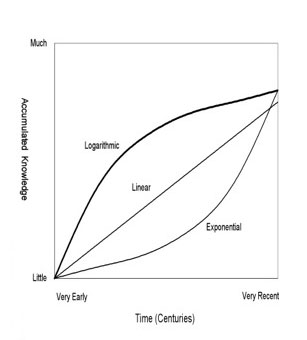
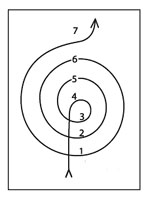





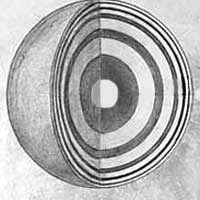


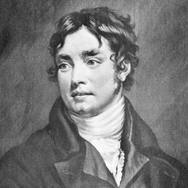
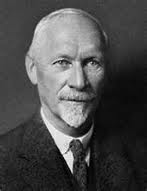
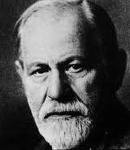
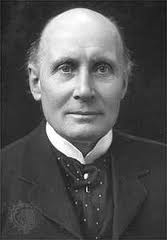

I am convinced that very
complete and accurate philosophies of life and of the nature of things have
been worked out by many individuals in many times and places, but never written
down, or if written were never published, or if published were never noticed,
or if noticed were forgotten.
~ William Braud
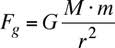
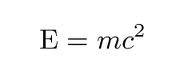






Nonevident Psi: Investigating the Invisible
William Braud
Note: This essay further
elaborates and extends ideas presented in a previously published article:
Braud, W. (1982). Nonevident psi. Parapsychology
Review, 13, 16-18. This earlier article is accessible on the Archived
Papers page of this website.
Our unaided sense of vision can reveal a great deal about the external world. But some of Nature's Ten Thousand Things—for example, things that are very small or things that are very far away—ordinarily are invisible to the naked eye. Our creativity and technology have allowed us to create tools such as microscopes and telescopes that allow us to perceive many of these formerly invisible things. But even with these tools, there are limitations to what vision can reveal about the world. To perceive and know more, it is necessary to employ other senses and other means of knowing. Our other senses—hearing, touch, taste, smell—expand our sensitivities and allow access to additional aspects of the physical world. Even with our full complement of senses, we still are able to appreciate only a narrow band of the wide spectrum of Nature's entities and energies.
Again, our creativity and technology come to our aid: We have developed physical tools—transducers—that convert imperceptible parts of Nature's wide energetic spectrum into parts that we can perceive. For example, simple compasses and less simple magnetometers convert imperceptible magnetic fields into needle movements or dial readings that our regular senses can detect, and Geiger counters convert different intensities of imperceptible radioactivity into dial readings and clicks that we can perceive. But even with the aid of such transducers, our knowledge of the external world ordinarily remains limited.
It is possible that our psychical functioning (psi) developed as a way of at least partially overcoming our sensory and instrumental limitations—allowing us to perceive nonlocally, to access what usually is beyond the reach of the senses and their mechanical aids. And, just as our senses and devices are optimized for the detection of particular types and intensities of energies, perhaps our psychical functioning also is optimized for detecting certain things readily and well, but able to detect others only poorly and erratically, if at all.
We know that psi seems able to mimic sensory functioning, in that it can allow access to visual, auditory, and other sensory types of information. Indeed, nearly all of the positive findings of parapsychology and of psychical research owe their success to this sensory-mimicking ability of psi. In nearly all empirical research studies, psi is determined to be present only to the extent that it can provide accurate sensory information that the researcher is able to verify. This realization might be codified by this statement: "The evidential depends upon the sensorily evident."
Because experiments have been set up to conclude that psi is present only when it provides information that can be sensorily validated, researchers have focused almost exclusively upon this important feature in proof-orientated research, and may have almost unconsciously assumed that this is all that psi can do. This seems a quite narrow and uncreative way of thinking about psi and its capabilities. The restriction of psi research in this fashion suggests an analogy. It is as though psi might be represented by a field of wildflowers and, rather than considering this rich and variegated field, we focus on only a certain type of flower and, even more narrowly, upon only a few petals of that flower.
Not
only has psi research been unnecessarily limited by focusing on psi as a
sensory mimicker, but this narrowness has been extended even further. Sensory
mimicking usually is limited to mimicking of the visual sense—in nearly all receptive psi experiments (i.e., studies
of telepathy, clairvoyance, and precognition) only visual targets are used. In
some experiments, the visual targets are deliberately narrowed even further to
those that have certain informational features and that also possess no affective
or emotional resonance (e.g., May,
Spottiswoode, & James, 1994). Such limitations are evident even in the names generally
given to these types of studies: clairvoyance
(clear vision or seeing) and remote viewing.
This essay addresses two major questions about psi: Is psi functioning redundant with sensory functioning? What might we be missing by treating it as such?
Is Psychic Functioning Redundant With Sensory Processing?
Should we expect psychic functioning and sensory functioning to be redundant? I do not think so. Certainly there is some overlap between what we learn psychically and what we learn sensorily. If this were not the case our usual psi experiments would not succeed, since—as previously mentioned—the very success of these experiments requires sensory verification. However, the degree of this overlap may not be very extensive. Psi may provide us with information about the world that is quite unlike the information provided by the senses. An analogy with sensory processing might be useful here. There is some overlap in the operating characteristics of our various senses. However, there are important differences as well. While it is possible to learn some things about vision by studying audition, many things will not be learned until we study vision itself and discover its unique characteristics. To fully understand vision, at some point we must see, and see many different things under many different conditions; it is to no avail to restrict ourselves completely to inferences and analogies based upon what we know of audition.
Nature has provided us with different senses for different types of information. Perhaps Nature's bequest of psi provides us with the possibility of still other forms of information. For things to be otherwise would be just as maladaptive as would the possession by a human being of five pairs of ears, but no eyes, nose, tongue, or touch organs. Of what use is psi if it does only what the senses do? Psychologist and parapsychologist Lawrence LeShan once stated the problem picturesquely in a comment to me at a Parapsychology Foundation Conference. "Have there been any experiments designed to evaluate what kind of information [psi] is designed for?" he asked. "For example, is it possible that psi might better be viewed as a sensory processing system to communicate mood and emotion rather than specific information? To use an analogy, more like listening to the Triple Concerto rather than directions on how to change spark plugs."
This essay addresses two major questions about psi: Is psi functioning redundant with sensory functioning? What might we be missing by treating it as such?
Is Psychic Functioning Redundant With Sensory Processing?
Should we expect psychic functioning and sensory functioning to be redundant? I do not think so. Certainly there is some overlap between what we learn psychically and what we learn sensorily. If this were not the case our usual psi experiments would not succeed, since—as previously mentioned—the very success of these experiments requires sensory verification. However, the degree of this overlap may not be very extensive. Psi may provide us with information about the world that is quite unlike the information provided by the senses. An analogy with sensory processing might be useful here. There is some overlap in the operating characteristics of our various senses. However, there are important differences as well. While it is possible to learn some things about vision by studying audition, many things will not be learned until we study vision itself and discover its unique characteristics. To fully understand vision, at some point we must see, and see many different things under many different conditions; it is to no avail to restrict ourselves completely to inferences and analogies based upon what we know of audition.
Nature has provided us with different senses for different types of information. Perhaps Nature's bequest of psi provides us with the possibility of still other forms of information. For things to be otherwise would be just as maladaptive as would the possession by a human being of five pairs of ears, but no eyes, nose, tongue, or touch organs. Of what use is psi if it does only what the senses do? Psychologist and parapsychologist Lawrence LeShan once stated the problem picturesquely in a comment to me at a Parapsychology Foundation Conference. "Have there been any experiments designed to evaluate what kind of information [psi] is designed for?" he asked. "For example, is it possible that psi might better be viewed as a sensory processing system to communicate mood and emotion rather than specific information? To use an analogy, more like listening to the Triple Concerto rather than directions on how to change spark plugs."
What Might We Be Missing
When We Treat Psi and Sensory Functioning as Redundant Processes?
Indeed, for what kind of information is psi designed? It may be designed, in part at least, to detect information potentially available to the senses but not yet available at the time because of distance or time constraints. Thus, psi may participate in "anticipatory redundancy" experiences in everyday life and in the laboratory when it provides a percipient with information that will become apparent at a later time to the percipient's own senses or to the senses of judges or experimenters. But this is a trivial case, although it consumes almost all of our research efforts. Of greater interest are those cases in which psi might provide information not immediately evident to the senses of those who later inspect a target. It is to this possibility that I have given the name nonevident psi.
What might some of this nonevident information be? Information might be provided about larger relationships in which the target participates, information about the manner in which the target is connected with other events, distant now from the target in time or space. For example, psi might tell us about the past and future histories of some object or person, or about other events with which the object has interacted in the past (or will interact in the future). Psi may indicate which objects are or were once parts of some greater organization. Psi may provide information about nonevident emotions or moods, nonevident contingencies, the nonevident truth or falsity of a statement, the meaning of some object or event, the purpose or function of some object or event. It might provide information about the locations of objects or events on some psychic dimensions not obviously correlated with easily defined physical dimensions.
This last possibility requires further elaboration. Two objects or events may be quite dissimilar physically, yet have very similar positions in "semantic space." This space is not evident from physical properties alone, but may be measured by means of a psychological instrument such as Charles Osgood's semantic differential (Osgood, Suci, & Tannenbaum, 1957). So too, psychic scaling procedures (accomplished, perhaps, through the aid of gifted psychics) may reveal consistent similarities not evident through nonpsychic methods of measurement. Several psychics could provide independent assessments, and aspects of those assessments that possess significant commonality would be accepted as "real" even if they did not agree with typical sensory validations. Consensus analyses, based on overlapping impressions of groups of research participants, often have been used in prior psi research studies (e.g., Schwartz, 2007). What is suggested here is the extension of this familiar procedure for use in studying nonevident psi. Of course, suitable precautions should be taken to rule out confounds such as response bias, "stacking effects," nonparanormal inference, and so on. Some of the suggestions put forward by Charles Tart (1972) in his "state specific sciences" paper may be useful here as well.
The Nonevident Yet Evidential: Additional Possibilities and Seeds for Experimentation
It is my purpose in this brief paper simply to suggest some nonevident psi possibilities and to provoke psychical researchers to devote some thought to this issue. Together, perhaps we can conceive of some of the less obvious "messages" psi might provide about the world and develop ways of testing the validity of such messages. What are some of these additional possibilities? Here, I will elaborate more fully and extend what has been mentioned above.
By studying only the ways in which psi is redundant with sensory and motor functioning—i.e., how it can simulate sensory awareness in receptive psi studies or simulate motor functioning in psychokinesis studies—we may be missing opportunities to learn about the more unique forms of knowing, doing, and being that may be possible through psi. Since we have well-developed sensory systems that inform us of the immediately evident sensory world, and well-developed motor systems that help us influence that world, perhaps psi is better adapted to provide us with less obvious forms of knowledge about ourselves, others, and the world. We could consider devising research projects that could explore psi's role in providing knowledge of the nonevident. Indeed, this could be the domain for which psi is most adapted.
We can use our conventional senses readily to discern the formal properties of things and events around us—their shapes, sizes, colors, sounds, textures. These are the qualities we ask psi to apprehend in our typical experiments and even in our spontaneous case research. This is understandable, for these physical qualities are easy to measure, and it is easy to assess the presence or absence of accuracy in their description. However, psi may be more adapted for helping us discern more subtle, latent, or tacit qualities of things, events, or persons. There is space, in the next few paragraphs, only to mention several of these potential avenues of exploration; each one of these could be developed into a rich area of inquiry for psi researchers.
Psi might allow us to know thoughts, feelings, predispositions, or tendencies that are not being overtly expressed by ourselves or by others. It might allow us to know past or future "histories" of events or persons. It might allow us to discern relationships or associations of which persons, events, or things are part. It might help us discern hidden causes, latent effects, potentials, probabilities, likely and unlikely accompaniments, facilitating or interfering conditions, or various likely or unlikely consequences of events or decisions. It might allow us to know the inner conditions of others—emotional conditions, states of consciousness, stages or stations of development, complex bodily conditions associated with health, illness, immunity, or susceptibility to disease or to growth.
Psi may allow us to know the nearness or distance between things, persons, or events in dimensions or qualities of psychic space of which we currently are unaware. Exploring more deeply what, at first, may appear as "misses" in psi experiments could alert us to commonalities in such reports or responses—commonalities that may have nothing to do with the sensorily obvious qualities of a given target event, but may reflect a nonevident target characteristic that could be accessible to psi. It is true that some such common reactions could reflect "response biases"; however, some response biases may reflect coherent reactions that may be tied to specific, but nonevident, target qualities. Through psi, we may be able to more directly discern forms of subtle energy or the qualities, activities, or directions of such energies. In a section above, I mentioned Osgood's semantic differential as an example of a tool that can allow us to identify positions of various objects or concepts in "meaning space."
Is there really such a thing as psychic space, and can it, its dimensions, or its contents be discerned directly? Can our conscious awareness itself be a measuring instrument, a kind of psychoassay, for events and influences for which no other detectors presently exist? In exploring such areas, challenges involving the validity and trustworthiness of these observations and knowings would be great, but not insurmountable. A promising tool for such investigations is the projective differential developed by Peter Raynolds (1997). The technique uses rapidly presented pairs of abstract images as a way of measuring holistic and intuitive responses to a wide range of objects, persons, situations, or concepts. The technique provides quantitative and qualitative assessments of subtle, nonevident qualities and meanings. It should be possible to use the projective differential in novel studies of nonevident psi.
Nonevident psi may allow us to access what Henry Corbin (1972) called the mundus imaginalis, the imaginal world. This is the subtle, visionary, intermediary, archetypal, spiritual realm—a realm encountered by the active, creative imagination. In exploring this world through nonevident psi, or as a means of further understanding nonevident psi, we should be careful not to project upon this realm too many of our conventional notions of physicality, spatiality, temporality, and causality. In this way, we could experience and learn from the unique qualities of this realm, while avoiding what philosophers call category errors.
Functioning as another kind of psychoassay, psi may best be able to detect itself—to allow us to know whether a given person is presently engaging in psychic activity. If this is so, this could help us learn about likely psi-sources in ambigous experimental or naturally-occurring situations. Psi may be able to offer protection against unwanted psychic intrusions. Psi may provide helpful indicators of archetypal presences or of the presence or reflection of oneness, truth, goodness, or beauty. It might provide indications through which wisdom might be known more directly. It might provide clues regarding safety or danger. It could provide indications of needs, deficiencies, excesses, balances, or imbalances. Psychic information about any of the foregoing, as well as indicators of the reliability or consensus of such information, could be explored through the design of creative new research protocols. Many of these potential functions of psi could be of greater usefulness to research participants—providing additional discernment tools for use in everyday life—than psi's ability to describe, redundantly, readily accessible sensory events.
Psi research, understandably, has emphasized the evidential aspects of the psi process. In doing so, however, it has virtually ignored other factors, except insofar as such factors may impact evidentiality. We could expand our inquiries to include other patterns that we might find in our laboratory studies that do not relate directly to the specified target events. Similarly, we can search for patterns in our research participants themselves—in both laboratory and more naturalistic studies—that could provide generalizations about matters other than their accuracy, as conventionally conceived, in directing psi. Such research could yield exciting findings about the psychology of psi experiencers—information about how they might use, interpret, attribute meaning, or experience impacts of psi and related activities in their everyday lives, and how psi might contribute to their worldviews. These nonevidential or nonveridical investigations are just the kinds of studies that are likely to be co-opted by researchers in other fields, and they may provide rich veins that we, as psi researchers, could mine ourselves, were we not to downplay their potentials because, presently, we can see no tie-ins of such studies with evidential questions. Psychical research, in the past, has lost several areas of inquiry to related disciplines—e.g., the subliminal mind, dissociative processes, mesmerism and hypnosis, many topics associated with dreaming, out-of-body experiences, near-death-experiences, other unusual states of consciousness, spiritual emergence and emergencies. The same thing may happen with respect to more aspects of the topics just mentioned, as well as additional topics in areas such as spontaneous cases, exceptional human experiences, unusual instances of healing, intuitive decisional techniques, subtle energies, the psychology of channeling, etc., if such phenomena are dismissed because they do not have sufficiently unambiguous evidential or veridical yields.
Still another promising area of nonevident psi research would be exploration of the possibility that a particular characteristic of an object that remains nonevident until detected by psi is that object's prior or concurrent interaction with psi. It may be the case, as has been suggested by Milan Ryzl (1982), that attempts to psychically discern some hidden object result in a relatively permanent "mental imprint" or "psychic impregnation" of the object which might be psychically detected at a later time. Ryzl's research on Pavel Stepanek's "focusing effect" certainly suggests this possibility.
Also relevant is the suggestion (Osis, 1953; Osis & McCormick, 1980; Rhine, 1947) that ESP is accompanied by a concurrent psychokinetic influence upon the target and vice versa. The Osis and McCormick (1980) finding of an ostensible psychokinetic effect near a target during successful, but not during unsuccessful out-of-body psi detections of that target, and the sketchily reported "biodetector" findings of Yongjie, Hongzhang, Jing, and Aihua (1982) are consistent with this view.
In both of these cases, psi may leave traces upon some object or event that remain opaque to physical measurement, but become transparent to psi measurement. Studies of such possibilities could develop into an exciting long-term nonevident psi research program.
There are two areas of psychical research that already are studying nonevident psi, albeit not under that name. These are mediumship research and psychometry (token object) research. In both of these, any information learned from mediums or psychometrists that involves the various qualities treated in above sections (about relationships, histories, connections, tacit memories, and so on), rather than strictly verifiable sensory impressions, is of great relevance to the study of nonevident psi.
An Unsuccessful First Attempt
Back in 1982, a pilot investigation was conducted at the Mind Science Foundation, with the assistance of Michael Jordan and Byron McKinney, in which we explored one possible means of testing the psychic apprehension of relationships which are not sensorily evident. Objects may be related or "connected" in several ways. They may be copies or parts of some common whole. They may share similar past or future histories, common ownership, common source, common purpose. They may have been acted upon by the same person, have the same function, be conceptually related. They may have shared spatial or temporal proximity.
For this initial effort, we chose to investigate psychic reactions to concealed objects (human hair samples) related to each other in two ways. The hairs had a common origin and were fragments from the same lock. We sought to determine whether volunteers could psychically detect the relationship shared by the two hair samples. Of course., the individual hair samples could be detected directly through clairvoyance and the relationship determined through rational inference. However, it may be the case that psi is more sensitive to relationships per se (or to any of the characteristics mentioned in above sections of this paper) than to the physical characteristics of targets. If this is the case, one might expect a higher hit rate for the relationship aspect than for "straight" clairvoyant detection of the physical target itself. In fact, the relationship might be detected even in the absence of knowledge of the elements contributing to that relationship.
Fifty‑three volunteers participated in the pilot study and were tested individually. The volunteer was confronted with five small, identical, attractive white cardboard gift boxes, each bearing a code number between 1 and 5. Inside each box was a light object taped to a cardboard support and covered with a layer of cotton. Two of the objects were hair samples; the other objects were candle wax, a rubber band, and a plastic paper clip. These last three control objects were selected from an office supplies storage cabinet and had no long-term association with one another or with a particular person. The hair samples were from a person very favorably disposed toward psi. A lock of hair was cut and this lock was cut again to provide two related hair samples. Weight differences of the boxes were well controlled. The experimenters were aware of the five objects but unaware of which boxes contained which objects. For the first 20 volunteers, the objects were simply placed in the boxes as described. For the next 33 volunteers, the objects were completely sealed inside of glass tubes (by a local glassblower) and the tubes were placed in the boxes sandwiched between layers of cotton. This was done in order to eliminate any possible olfactory cues that could have been provided by the materials.
The volunteer was asked to freely discuss the contents of each box. When this had been completed, the experimenter opened an envelope that indicated which box was the "key" (i.e., was one of the two boxes containing hair). He then asked the volunteer to rank order the remaining four boxes from "most related" to "least related" to the still sealed key box. This ranking provided the primary data for the experiment. On the basis of chance, "hits" (rankings of the hidden hair sample as 1 or 2) should occur equally often as "misses" (rankings of the hidden hair sample as 3 or 4). A statistically significant excess of hits would indicate the accurate psychic awareness of a concealed relationship. The experimenter then asked two further questions of the volunteer. The first question asked exactly how was the "most related box" related to the "key box." The second question asked about the exact contents of the boxes.
Results indicated that of the 53 volunteers tested, 31 yielded binary hits while 22 yielded binary misses, a distribution that did not differ from chance expectation. Analysis of the 17 direct hits (rankings of 1 for the hidden hair sample) also yielded chance results. Thus, there was no overall evidence in this experiment for paranormal awareness of the concealed relationship. Additional details regarding this experiment may be found in Braud (1982).
If this experiment had yielded positive results, we would have gone on to design a second experiment in which paranormal awareness of the concealed relationship would have been directly compared with "conventional" clairvoyant awareness of the contents of the boxes.
Despite the negative findings of this preliminary study, we urge others to explore this and other strategies that might shed light upon nonevident psi. Psychometry (or "token object") tests (Parra & Argibay, 2007; Roll, 1964) and "psi mediated instrumental response" tests (Stanford, 1974a, 1974b) are steps in this direction, but surely there are many others awaiting discovery.
References
Braud, W. (1982). Nonevident psi. Parapsychology Review, 13, 16-18.
Corbin, H. (1972). Mundus imaginalis, or the imaginary and the imaginal. Spring 1972: An Annual of Archetypal Psychology and Jungian Thought, 1-19.
May, E. C., Spottiswoode, S. J. P. & James, C. L. (1994). Shannon entropy: A possible intrinsic target property. Journal of Parapsychology, 58, 384-401.
Osgood, C., Suci, G., & Tannenbaum, P. (1957). The measurement of meaning. Urbana, IL: University of Illinois Press.
Osis, K. (1953). A test of the relationship between ESP and PK. Journal of Parapsychology, 17, 298‑309.
Osis, K., & McCormick, D. (1980). Kinetic effects at the ostensible location of an out-of-body projection during perceptual testing. Journal of the American Society for Psychical Research, 74, 319‑330.
Parra, A., & Argibay, J. C. (2007). Comparing psychics and non-psychics through a "token object" forced-choice ESP test. Journal of the Society for Psychical Research, 71(2), 80-90.
Raynolds, P. A. (1997). On taming the evaluation monster: Toward holistic assessments of transformational training effects. Simulation and Gaming: An International Journal of Theory, Practice and Research, 28(3), 286-316.
Rhine, J. B. (1947). The reach of the mind. New York: William Sloane Associates.
Roll, W. G. (1964). The "psi field." Presidential address read at the Seventh Annual Convention of the Parapsychological Association, Oxford, England.
Ryzl, M. (1982). Mental imprints‑An overlooked breakthrough in parapsychology? Psi Research, 1, 14‑26.
Schwartz, S. (2007). Opening to the infinite: The art and science of nonlocal awareness. Nemoseen Media.
Stanford, R. G. (1974a). An experimentally testable model for spontaneous psi events: I. Extrasensory events. Journal of The American Society for Psychical Research, 68, 34-57.
Indeed, for what kind of information is psi designed? It may be designed, in part at least, to detect information potentially available to the senses but not yet available at the time because of distance or time constraints. Thus, psi may participate in "anticipatory redundancy" experiences in everyday life and in the laboratory when it provides a percipient with information that will become apparent at a later time to the percipient's own senses or to the senses of judges or experimenters. But this is a trivial case, although it consumes almost all of our research efforts. Of greater interest are those cases in which psi might provide information not immediately evident to the senses of those who later inspect a target. It is to this possibility that I have given the name nonevident psi.
What might some of this nonevident information be? Information might be provided about larger relationships in which the target participates, information about the manner in which the target is connected with other events, distant now from the target in time or space. For example, psi might tell us about the past and future histories of some object or person, or about other events with which the object has interacted in the past (or will interact in the future). Psi may indicate which objects are or were once parts of some greater organization. Psi may provide information about nonevident emotions or moods, nonevident contingencies, the nonevident truth or falsity of a statement, the meaning of some object or event, the purpose or function of some object or event. It might provide information about the locations of objects or events on some psychic dimensions not obviously correlated with easily defined physical dimensions.
This last possibility requires further elaboration. Two objects or events may be quite dissimilar physically, yet have very similar positions in "semantic space." This space is not evident from physical properties alone, but may be measured by means of a psychological instrument such as Charles Osgood's semantic differential (Osgood, Suci, & Tannenbaum, 1957). So too, psychic scaling procedures (accomplished, perhaps, through the aid of gifted psychics) may reveal consistent similarities not evident through nonpsychic methods of measurement. Several psychics could provide independent assessments, and aspects of those assessments that possess significant commonality would be accepted as "real" even if they did not agree with typical sensory validations. Consensus analyses, based on overlapping impressions of groups of research participants, often have been used in prior psi research studies (e.g., Schwartz, 2007). What is suggested here is the extension of this familiar procedure for use in studying nonevident psi. Of course, suitable precautions should be taken to rule out confounds such as response bias, "stacking effects," nonparanormal inference, and so on. Some of the suggestions put forward by Charles Tart (1972) in his "state specific sciences" paper may be useful here as well.
The Nonevident Yet Evidential: Additional Possibilities and Seeds for Experimentation
It is my purpose in this brief paper simply to suggest some nonevident psi possibilities and to provoke psychical researchers to devote some thought to this issue. Together, perhaps we can conceive of some of the less obvious "messages" psi might provide about the world and develop ways of testing the validity of such messages. What are some of these additional possibilities? Here, I will elaborate more fully and extend what has been mentioned above.
By studying only the ways in which psi is redundant with sensory and motor functioning—i.e., how it can simulate sensory awareness in receptive psi studies or simulate motor functioning in psychokinesis studies—we may be missing opportunities to learn about the more unique forms of knowing, doing, and being that may be possible through psi. Since we have well-developed sensory systems that inform us of the immediately evident sensory world, and well-developed motor systems that help us influence that world, perhaps psi is better adapted to provide us with less obvious forms of knowledge about ourselves, others, and the world. We could consider devising research projects that could explore psi's role in providing knowledge of the nonevident. Indeed, this could be the domain for which psi is most adapted.
We can use our conventional senses readily to discern the formal properties of things and events around us—their shapes, sizes, colors, sounds, textures. These are the qualities we ask psi to apprehend in our typical experiments and even in our spontaneous case research. This is understandable, for these physical qualities are easy to measure, and it is easy to assess the presence or absence of accuracy in their description. However, psi may be more adapted for helping us discern more subtle, latent, or tacit qualities of things, events, or persons. There is space, in the next few paragraphs, only to mention several of these potential avenues of exploration; each one of these could be developed into a rich area of inquiry for psi researchers.
Psi might allow us to know thoughts, feelings, predispositions, or tendencies that are not being overtly expressed by ourselves or by others. It might allow us to know past or future "histories" of events or persons. It might allow us to discern relationships or associations of which persons, events, or things are part. It might help us discern hidden causes, latent effects, potentials, probabilities, likely and unlikely accompaniments, facilitating or interfering conditions, or various likely or unlikely consequences of events or decisions. It might allow us to know the inner conditions of others—emotional conditions, states of consciousness, stages or stations of development, complex bodily conditions associated with health, illness, immunity, or susceptibility to disease or to growth.
Psi may allow us to know the nearness or distance between things, persons, or events in dimensions or qualities of psychic space of which we currently are unaware. Exploring more deeply what, at first, may appear as "misses" in psi experiments could alert us to commonalities in such reports or responses—commonalities that may have nothing to do with the sensorily obvious qualities of a given target event, but may reflect a nonevident target characteristic that could be accessible to psi. It is true that some such common reactions could reflect "response biases"; however, some response biases may reflect coherent reactions that may be tied to specific, but nonevident, target qualities. Through psi, we may be able to more directly discern forms of subtle energy or the qualities, activities, or directions of such energies. In a section above, I mentioned Osgood's semantic differential as an example of a tool that can allow us to identify positions of various objects or concepts in "meaning space."
Is there really such a thing as psychic space, and can it, its dimensions, or its contents be discerned directly? Can our conscious awareness itself be a measuring instrument, a kind of psychoassay, for events and influences for which no other detectors presently exist? In exploring such areas, challenges involving the validity and trustworthiness of these observations and knowings would be great, but not insurmountable. A promising tool for such investigations is the projective differential developed by Peter Raynolds (1997). The technique uses rapidly presented pairs of abstract images as a way of measuring holistic and intuitive responses to a wide range of objects, persons, situations, or concepts. The technique provides quantitative and qualitative assessments of subtle, nonevident qualities and meanings. It should be possible to use the projective differential in novel studies of nonevident psi.
Nonevident psi may allow us to access what Henry Corbin (1972) called the mundus imaginalis, the imaginal world. This is the subtle, visionary, intermediary, archetypal, spiritual realm—a realm encountered by the active, creative imagination. In exploring this world through nonevident psi, or as a means of further understanding nonevident psi, we should be careful not to project upon this realm too many of our conventional notions of physicality, spatiality, temporality, and causality. In this way, we could experience and learn from the unique qualities of this realm, while avoiding what philosophers call category errors.
Functioning as another kind of psychoassay, psi may best be able to detect itself—to allow us to know whether a given person is presently engaging in psychic activity. If this is so, this could help us learn about likely psi-sources in ambigous experimental or naturally-occurring situations. Psi may be able to offer protection against unwanted psychic intrusions. Psi may provide helpful indicators of archetypal presences or of the presence or reflection of oneness, truth, goodness, or beauty. It might provide indications through which wisdom might be known more directly. It might provide clues regarding safety or danger. It could provide indications of needs, deficiencies, excesses, balances, or imbalances. Psychic information about any of the foregoing, as well as indicators of the reliability or consensus of such information, could be explored through the design of creative new research protocols. Many of these potential functions of psi could be of greater usefulness to research participants—providing additional discernment tools for use in everyday life—than psi's ability to describe, redundantly, readily accessible sensory events.
Psi research, understandably, has emphasized the evidential aspects of the psi process. In doing so, however, it has virtually ignored other factors, except insofar as such factors may impact evidentiality. We could expand our inquiries to include other patterns that we might find in our laboratory studies that do not relate directly to the specified target events. Similarly, we can search for patterns in our research participants themselves—in both laboratory and more naturalistic studies—that could provide generalizations about matters other than their accuracy, as conventionally conceived, in directing psi. Such research could yield exciting findings about the psychology of psi experiencers—information about how they might use, interpret, attribute meaning, or experience impacts of psi and related activities in their everyday lives, and how psi might contribute to their worldviews. These nonevidential or nonveridical investigations are just the kinds of studies that are likely to be co-opted by researchers in other fields, and they may provide rich veins that we, as psi researchers, could mine ourselves, were we not to downplay their potentials because, presently, we can see no tie-ins of such studies with evidential questions. Psychical research, in the past, has lost several areas of inquiry to related disciplines—e.g., the subliminal mind, dissociative processes, mesmerism and hypnosis, many topics associated with dreaming, out-of-body experiences, near-death-experiences, other unusual states of consciousness, spiritual emergence and emergencies. The same thing may happen with respect to more aspects of the topics just mentioned, as well as additional topics in areas such as spontaneous cases, exceptional human experiences, unusual instances of healing, intuitive decisional techniques, subtle energies, the psychology of channeling, etc., if such phenomena are dismissed because they do not have sufficiently unambiguous evidential or veridical yields.
Still another promising area of nonevident psi research would be exploration of the possibility that a particular characteristic of an object that remains nonevident until detected by psi is that object's prior or concurrent interaction with psi. It may be the case, as has been suggested by Milan Ryzl (1982), that attempts to psychically discern some hidden object result in a relatively permanent "mental imprint" or "psychic impregnation" of the object which might be psychically detected at a later time. Ryzl's research on Pavel Stepanek's "focusing effect" certainly suggests this possibility.
Also relevant is the suggestion (Osis, 1953; Osis & McCormick, 1980; Rhine, 1947) that ESP is accompanied by a concurrent psychokinetic influence upon the target and vice versa. The Osis and McCormick (1980) finding of an ostensible psychokinetic effect near a target during successful, but not during unsuccessful out-of-body psi detections of that target, and the sketchily reported "biodetector" findings of Yongjie, Hongzhang, Jing, and Aihua (1982) are consistent with this view.
In both of these cases, psi may leave traces upon some object or event that remain opaque to physical measurement, but become transparent to psi measurement. Studies of such possibilities could develop into an exciting long-term nonevident psi research program.
There are two areas of psychical research that already are studying nonevident psi, albeit not under that name. These are mediumship research and psychometry (token object) research. In both of these, any information learned from mediums or psychometrists that involves the various qualities treated in above sections (about relationships, histories, connections, tacit memories, and so on), rather than strictly verifiable sensory impressions, is of great relevance to the study of nonevident psi.
An Unsuccessful First Attempt
Back in 1982, a pilot investigation was conducted at the Mind Science Foundation, with the assistance of Michael Jordan and Byron McKinney, in which we explored one possible means of testing the psychic apprehension of relationships which are not sensorily evident. Objects may be related or "connected" in several ways. They may be copies or parts of some common whole. They may share similar past or future histories, common ownership, common source, common purpose. They may have been acted upon by the same person, have the same function, be conceptually related. They may have shared spatial or temporal proximity.
For this initial effort, we chose to investigate psychic reactions to concealed objects (human hair samples) related to each other in two ways. The hairs had a common origin and were fragments from the same lock. We sought to determine whether volunteers could psychically detect the relationship shared by the two hair samples. Of course., the individual hair samples could be detected directly through clairvoyance and the relationship determined through rational inference. However, it may be the case that psi is more sensitive to relationships per se (or to any of the characteristics mentioned in above sections of this paper) than to the physical characteristics of targets. If this is the case, one might expect a higher hit rate for the relationship aspect than for "straight" clairvoyant detection of the physical target itself. In fact, the relationship might be detected even in the absence of knowledge of the elements contributing to that relationship.
Fifty‑three volunteers participated in the pilot study and were tested individually. The volunteer was confronted with five small, identical, attractive white cardboard gift boxes, each bearing a code number between 1 and 5. Inside each box was a light object taped to a cardboard support and covered with a layer of cotton. Two of the objects were hair samples; the other objects were candle wax, a rubber band, and a plastic paper clip. These last three control objects were selected from an office supplies storage cabinet and had no long-term association with one another or with a particular person. The hair samples were from a person very favorably disposed toward psi. A lock of hair was cut and this lock was cut again to provide two related hair samples. Weight differences of the boxes were well controlled. The experimenters were aware of the five objects but unaware of which boxes contained which objects. For the first 20 volunteers, the objects were simply placed in the boxes as described. For the next 33 volunteers, the objects were completely sealed inside of glass tubes (by a local glassblower) and the tubes were placed in the boxes sandwiched between layers of cotton. This was done in order to eliminate any possible olfactory cues that could have been provided by the materials.
The volunteer was asked to freely discuss the contents of each box. When this had been completed, the experimenter opened an envelope that indicated which box was the "key" (i.e., was one of the two boxes containing hair). He then asked the volunteer to rank order the remaining four boxes from "most related" to "least related" to the still sealed key box. This ranking provided the primary data for the experiment. On the basis of chance, "hits" (rankings of the hidden hair sample as 1 or 2) should occur equally often as "misses" (rankings of the hidden hair sample as 3 or 4). A statistically significant excess of hits would indicate the accurate psychic awareness of a concealed relationship. The experimenter then asked two further questions of the volunteer. The first question asked exactly how was the "most related box" related to the "key box." The second question asked about the exact contents of the boxes.
Results indicated that of the 53 volunteers tested, 31 yielded binary hits while 22 yielded binary misses, a distribution that did not differ from chance expectation. Analysis of the 17 direct hits (rankings of 1 for the hidden hair sample) also yielded chance results. Thus, there was no overall evidence in this experiment for paranormal awareness of the concealed relationship. Additional details regarding this experiment may be found in Braud (1982).
If this experiment had yielded positive results, we would have gone on to design a second experiment in which paranormal awareness of the concealed relationship would have been directly compared with "conventional" clairvoyant awareness of the contents of the boxes.
Despite the negative findings of this preliminary study, we urge others to explore this and other strategies that might shed light upon nonevident psi. Psychometry (or "token object") tests (Parra & Argibay, 2007; Roll, 1964) and "psi mediated instrumental response" tests (Stanford, 1974a, 1974b) are steps in this direction, but surely there are many others awaiting discovery.
References
Braud, W. (1982). Nonevident psi. Parapsychology Review, 13, 16-18.
Corbin, H. (1972). Mundus imaginalis, or the imaginary and the imaginal. Spring 1972: An Annual of Archetypal Psychology and Jungian Thought, 1-19.
May, E. C., Spottiswoode, S. J. P. & James, C. L. (1994). Shannon entropy: A possible intrinsic target property. Journal of Parapsychology, 58, 384-401.
Osgood, C., Suci, G., & Tannenbaum, P. (1957). The measurement of meaning. Urbana, IL: University of Illinois Press.
Osis, K. (1953). A test of the relationship between ESP and PK. Journal of Parapsychology, 17, 298‑309.
Osis, K., & McCormick, D. (1980). Kinetic effects at the ostensible location of an out-of-body projection during perceptual testing. Journal of the American Society for Psychical Research, 74, 319‑330.
Parra, A., & Argibay, J. C. (2007). Comparing psychics and non-psychics through a "token object" forced-choice ESP test. Journal of the Society for Psychical Research, 71(2), 80-90.
Raynolds, P. A. (1997). On taming the evaluation monster: Toward holistic assessments of transformational training effects. Simulation and Gaming: An International Journal of Theory, Practice and Research, 28(3), 286-316.
Rhine, J. B. (1947). The reach of the mind. New York: William Sloane Associates.
Roll, W. G. (1964). The "psi field." Presidential address read at the Seventh Annual Convention of the Parapsychological Association, Oxford, England.
Ryzl, M. (1982). Mental imprints‑An overlooked breakthrough in parapsychology? Psi Research, 1, 14‑26.
Schwartz, S. (2007). Opening to the infinite: The art and science of nonlocal awareness. Nemoseen Media.
Stanford, R. G. (1974a). An experimentally testable model for spontaneous psi events: I. Extrasensory events. Journal of The American Society for Psychical Research, 68, 34-57.
Stanford, R.
G. (1974b). An experimentally testable model for spontaneous psi events: II.
Psychokinetic events. Journal of The American Society for Psychical
Research, 68, 321-356.
Tart, C. T. (1972). States
of consciousness and state-specific sciences. Science, 176, 1203‑1210.
Yongjie, Z., Hongzhang, X., Jing, S., & Aihua, L. (1982). Biodetector experiments on human body radiation physics. Psi Research, 1, 77‑84.
This essay Copyright © 2011 by William Braud. All rights reserved.
Yongjie, Z., Hongzhang, X., Jing, S., & Aihua, L. (1982). Biodetector experiments on human body radiation physics. Psi Research, 1, 77‑84.
This essay Copyright © 2011 by William Braud. All rights reserved.





Where is the knowledge that is lost
in information?
Where is the wisdom that is lost in
knowledge?
~ T. S. Eliot